Limelight Hydrangeas on the Seacoast: How to Grow Strong Blooms in Salt Wind and Sandy Soil
How to Grow Strong Blooms in Salt Wind and Sandy Soil
If you've driven through the neighborhoods of Portsmouth, Rye, or North Hampton in late summer, you've almost certainly spotted them—those towering, creamy-white flower heads nodding above a hedge or anchoring a sunny border. Limelight Hydrangeas (Hydrangea paniculata 'Limelight') are one of the most rewarding shrubs you can grow on the Seacoast, and with the right care, they'll put on a show that lasts from July well into October. But growing them well here, in our salt-kissed air, fast-draining soils, and unpredictable Zone 6b winters, takes a little more than good intentions.
The good news: Limelights are genuinely tough. More than most hydrangeas, this panicle type handles coastal conditions with real resilience—it blooms on new wood each year, so even a rough winter won't cost you your flowers. But "tough" doesn't mean "effortless," and on the Seacoast, the details matter.
Start With the Soil—Because Ours Works Against You
Sandy, fast-draining soil is the norm across much of Seacoast New Hampshire and Southern Maine, and while Limelights tolerate it better than many shrubs, they'll never reach their potential without some help. Before planting—or as an annual amendment for established shrubs—work in generous amounts of compost to improve moisture retention and feed the soil biology that keeps roots healthy. A 2–3 inch layer of organic mulch over the root zone, kept a few inches away from the base of the stem, will further slow moisture loss and moderate soil temperature through our freeze-thaw cycles.
In Exeter, Hampton, and inland spots with heavier loam, this matters slightly less—but along the immediate coast in Rye or Seabrook, where soils are often nearly pure sand, this step is non-negotiable. Deep, infrequent watering (rather than frequent shallow watering) encourages roots to chase moisture downward, building drought resilience over time. A newly planted Limelight needs consistent moisture through its first two seasons before it can truly fend for itself.
Salt Wind: The Invisible Stressor
Salt spray is a background condition most Seacoast gardeners underestimate until they see the damage—bronzed leaf margins, stunted growth, and flowers that never quite fill out. Limelights sit in a sweet spot: they're more salt-tolerant than most hydrangeas, but they still benefit from strategic placement. A windward hedge, a fence, or taller evergreens on the ocean-facing side can dramatically reduce the salt load reaching your shrubs.
In highly exposed locations in Rye Beach or Wallis Sands, consider pairing Limelights with a planted windbreak of beach plum, rugosa rose, or native bayberry—plants that actively thrive on the front line while sheltering more refined shrubs behind them. This kind of layered planting is a cornerstone of good coastal garden design, and it pays dividends for years.
Pruning: The Single Most Important Thing You Can Do
Here is where most homeowners either unlock a Limelight's full potential—or quietly hold it back year after year. Because Limelights bloom on new wood, they are pruned in late winter or early spring, before growth begins, typically late February through mid-March on the Seacoast. This timing is critical: prune too late and you're cutting off emerging growth; skip pruning entirely and the plant produces dozens of small, weak flower heads instead of fewer, larger, showstopping ones.
The goal is a combination of reduction and selective thinning. Reduce the overall height and width by roughly one-third, making cuts just above an outward-facing bud or a healthy side branch. Then thin out crossing, crowded, and spindly stems from the interior to improve airflow and direct the plant's energy into fewer, stronger shoots. What you're left with should be an open, well-spaced framework—not a flat-topped hedge, and not a stubbed-back stump. A properly pruned Limelight grows back with purpose, producing strong upright stems that can actually hold those heavy blooms upright through a coastal August wind.
Feeding, Timing, and Seasonal Care
A light application of a balanced, slow-release fertilizer in early spring—just as new growth begins—is usually all a Limelight needs in a season. Avoid high-nitrogen products that push leafy growth at the expense of flowers, and resist the urge to fertilize after midsummer, which can push tender new growth heading into fall that won't harden off before our first frost. In North Hampton, Stratham, and Greenland, where soils vary considerably, a soil test every few years is a worthwhile investment that takes the guesswork out of amendments entirely.
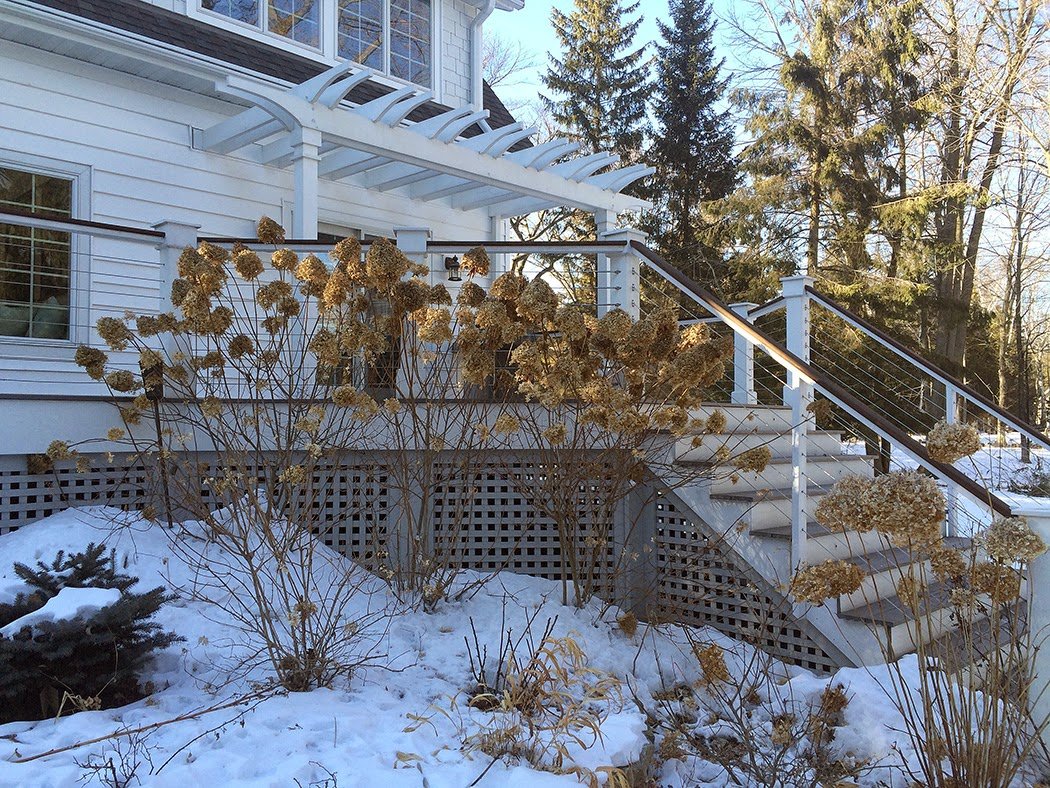
As summer transitions to fall, resist cutting the flower heads off as they age. Those dried, parchment-colored blooms are genuinely beautiful through September and October—and through winter, they add structure and quiet interest to the garden when little else is performing. Remove them as part of your spring pruning session rather than a fall cleanup.
What a Well-Grown Limelight Looks Like—and Why It's Worth the Effort
A mature, well-cared-for Limelight Hydrangea in a Seacoast garden is a remarkable thing. It grows 6–8 feet tall and wide with proper management, produces flower heads that can reach the size of a football, and transitions from chartreuse-white in July to blush-pink by September. It anchors a border with genuine structural presence, works beautifully underplanted with ornamental grasses or low perennials, and requires no staking, no deadheading, and no complicated overwintering—just smart pruning, good soil, and the right site.
In the gardens we care for across Portsmouth, Rye, Exeter, and the surrounding Seacoast towns, Limelights consistently rank among the most rewarding shrubs we maintain. The difference between a struggling specimen and a spectacular one almost always comes down to three things: soil prep, consistent moisture management, and pruning done at the right time in the right way.
Let Seacoast Gardener Help Yours Thrive
If your Limelights are underperforming—or if you've been meaning to add them to a sunny border and aren't sure where to start—we'd love to help. At Seacoast Gardener, we specialize in fine shrub care, seasonal pruning, mulching, and garden installation for homeowners across the Seacoast of New Hampshire and Southern Maine. We bring the same technical precision and care to every garden we tend, whether it's a single specimen shrub or a full mixed border renovation.
Reach out to us to schedule a consultation or a seasonal pruning visit. Your Limelights—and your whole garden—deserve to look their best. 📞 Contact us today at (603) 770-5072.