Spring Cleanup: How to Refresh Your Garden Beds After Winter
Spring Cleanup: How to Refresh Your Garden Beds After Winter
There is a particular kind of morning in late March on the Seacoast of New Hampshire when the light shifts, the soil starts to smell alive again, and every gardener feels the pull to get outside. It happens every year — that first real hint that winter is finished with us. For homeowners in Portsmouth, this is also the moment when the garden begins asking for attention, and how you respond in these early weeks will shape the health and beauty of your landscape all season long.
Spring cleanup is not just about tidying up. Done well and in the right sequence, it sets the biological stage for strong root development, healthy new growth, and a garden that looks intentional from May through October.
Reading the Garden Before You Touch It
The first and most important step in any spring cleanup is the one most people skip: slow down and look. Walk the beds before you start cutting or pulling. Notice which perennials are pushing up new growth from the crown, which shrubs survived winter intact, and where the damage — from salt spray, ice, deer browse, or desiccation — is most visible. On the Seacoast, Zone 6b winters are rarely uniform. A Portsmouth garden a few blocks from the water may show more winter burn on broadleaf evergreens than one tucked behind a windbreak further inland, and your cleanup approach should reflect what actually happened to your specific plants.
This is also the moment to assess your soil. Our coastal soils tend to be sandy, fast-draining, and low in organic matter after a long winter. Before you add amendments or mulch, take note of areas that look compacted, depleted, or crusted over. These are signals that the bed needs more than surface tidying — they need soil renewal as part of the spring plan.
When and What to Cut: The Pruning Question
Pruning is the most consequential thing you will do to your shrubs all year, and timing it correctly makes an enormous difference. For spring-flowering shrubs — forsythia, lilac, viburnum, and rhododendron — the rule is straightforward: wait until after bloom to prune. These plants set their flower buds on old wood the previous summer, and cutting now means cutting the flowers you have been waiting for since November. The one exception is removing clearly dead, broken, or crossing branches, which can be done at any time without affecting bloom.
For summer-flowering shrubs like panicle hydrangeas, spirea, and roses, late winter to early spring is the ideal pruning window — before growth breaks but after the hardest cold has passed. In our Zone 6b climate, late March through mid-April is typically the right bracket. The goal is to remove winter dieback, thin any congested stems, and, where needed, reduce the overall framework to encourage strong new growth from the base. Cut to healthy wood, clean up any crossing or rubbing stems, and step back frequently to evaluate the silhouette before removing more.
Ornamental trees benefit from a professional eye at this time of year. Removing hazardous limbs, addressing storm damage from the winter, and opening up the canopy for light and airflow are all tasks best done before leaves emerge. If you have a magnolia, cherry, or serviceberry that needs attention, early spring — before the buds swell — is the window.
Clearing, Weeding, and Bed Preparation
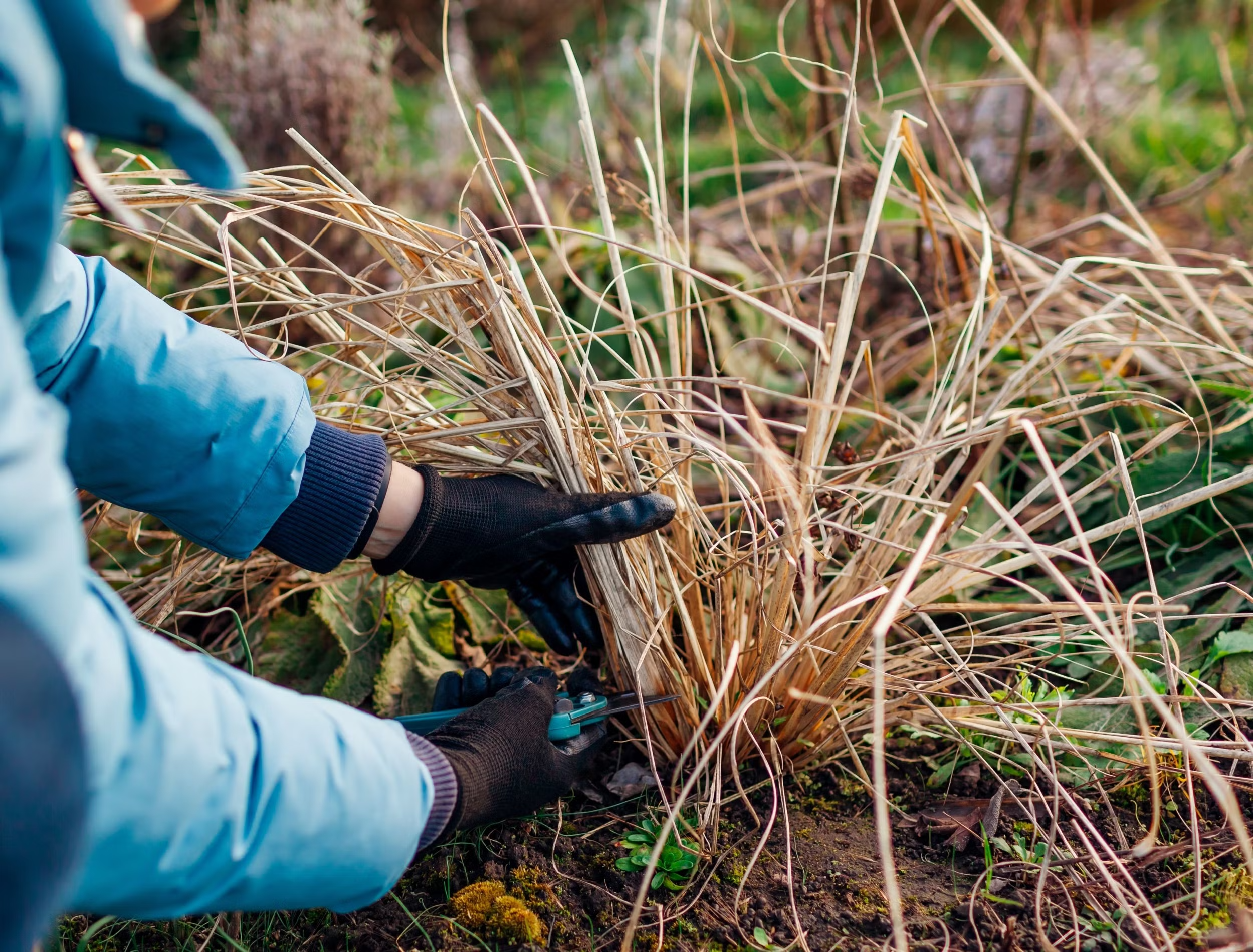
Once you have assessed the garden and completed any necessary pruning, the physical cleanup begins. Remove last year's perennial stems and ornamental grass foliage carefully — these have often sheltered overwintering beneficial insects, and cutting too early in a cold spring can disturb emerging pollinators. A good rule of thumb: wait until daytime temperatures are consistently in the 50s before doing a full cutback.
Weeding in early spring is one of the highest-leverage tasks a gardener can do. Many of our most persistent coastal weeds — chickweed, bittercress, and early crabgrass — germinate before we are even thinking about the garden. Getting them out before they set seed interrupts cycles that compound over years. Hand-pulling is most effective after a rain when the soil has some give, and it is far easier in April than in June.
The Case for Fresh Mulch — Done Right
Mulching is one of the most beneficial things you can do for your garden beds, but timing and technique matter. Apply mulch after the soil has had a chance to warm slightly — not while it is still frozen — so you are locking in warmth rather than cold. In our sandy Seacoast soils, a two-to-three-inch layer of shredded bark or wood mulch helps retain moisture through the dry stretches of summer, suppresses weeds, and slowly improves soil structure as it breaks down. Keep mulch pulled back from plant crowns and tree trunks to avoid rot and discourage rodent nesting over winter.
Let Seacoast Gardener Help You Start the Season Right
Spring cleanup done well is an investment in the entire growing year — but it takes knowledge, timing, and the right set of hands. Seacoast Gardener offers professional spring cleanup services throughout Portsmouth and the surrounding Seacoast region. Whether you need expert pruning for your ornamental shrubs, a full bed refresh with mulching and edging, or guidance on caring for established trees and mixed borders, our team brings the kind of fine-garden attention your landscape deserves. Reach out today to schedule your spring visit — your garden has been waiting all winter, and the right moment to start is now. Contact Us Now: 📞 (603) 770-5072 | 🌐 www.seacoastgardener.com