Keeping Hydrangeas Healthy, Hydrated, and Blooming Beautifully in Portsmouth, NH
Hydrangea Care Through the Summer
Few shrubs capture the spirit of a Seacoast summer quite like a hydrangea in full bloom. Their generous flower heads, ranging from soft blues and pinks to crisp whites and greens, bring a sense of abundance to gardens throughout Portsmouth, New Hampshire. But hydrangeas are also among the more demanding shrubs when it comes to summer care, and a little attentiveness through the season makes the difference between a plant that struggles through August and one that remains a highlight of the garden right through fall.
Understanding what hydrangeas need during the warmest months, and why they sometimes seem to wilt dramatically even when otherwise healthy, helps homeowners give these beloved shrubs exactly the right kind of attention.
Why Hydrangeas Wilt So Dramatically
If you have ever walked past a hydrangea on a hot afternoon and found its large leaves drooping almost to the ground, you have witnessed one of the most distinctive traits of this shrub. Hydrangeas have large, soft leaves with a correspondingly large surface area for water loss, and on hot days they can lose moisture faster than their roots can replace it, even when soil moisture is adequate.
This dramatic midday wilt often looks alarming, but in many cases the plant recovers fully once temperatures drop in the evening. The name hydrangea itself comes from the Greek for water vessel, a fitting reflection of just how much this plant depends on consistent moisture to perform at its best.
Watering Hydrangeas the Right Way
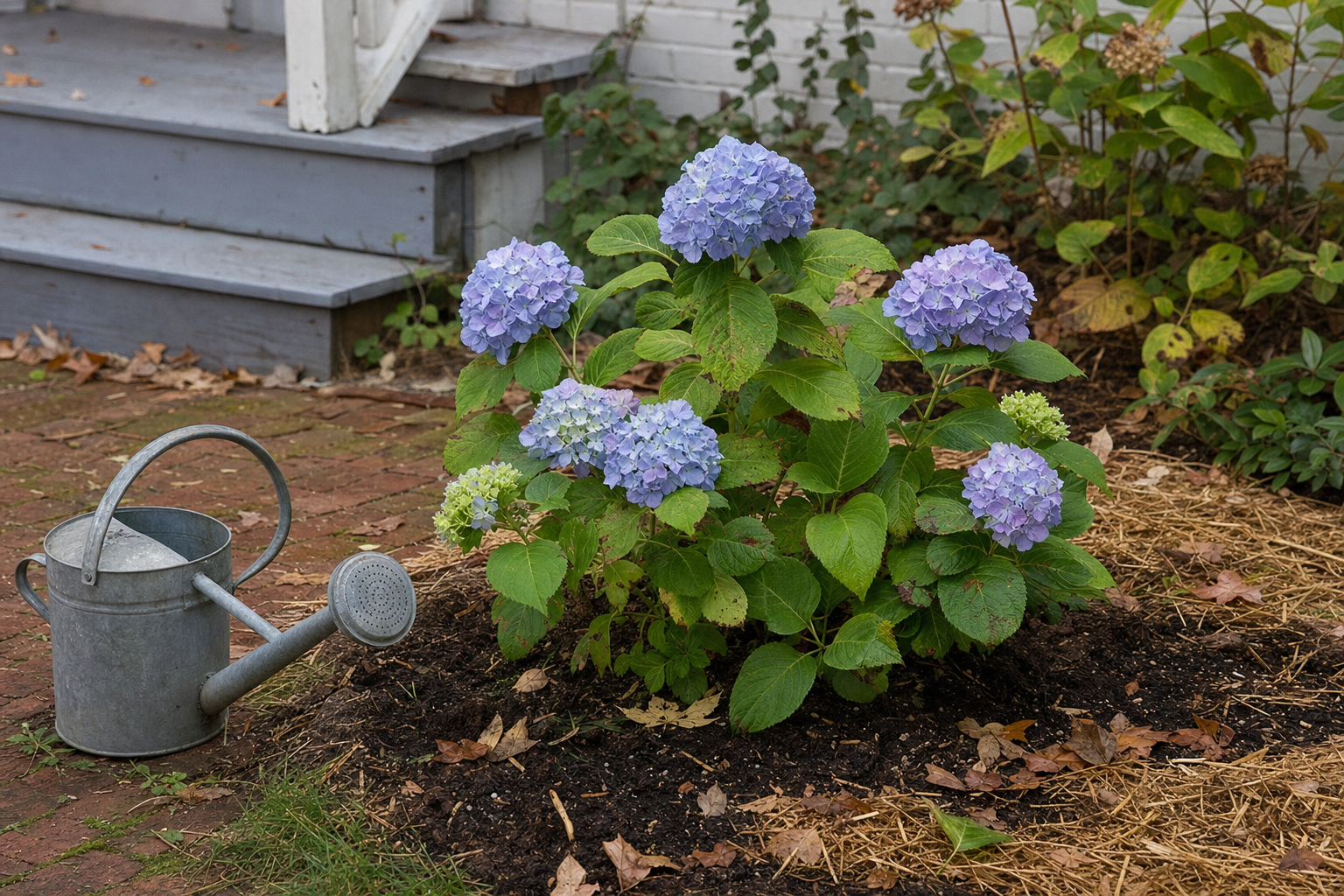
Despite their tendency toward dramatic wilting, hydrangeas do not need watering every time they droop on a hot afternoon. The more reliable approach is consistent, deep watering several times a week during dry stretches, checking soil moisture a few inches down before adding more water if the surface still feels damp.
In Portsmouth gardens with sandy or fast draining soil, hydrangeas often benefit from being planted with extra organic matter worked into the surrounding soil at planting time, which helps the root zone retain moisture longer between waterings. For established hydrangeas already in the ground, a generous layer of mulch around the root zone, kept a few inches from the stems, significantly reduces how quickly the soil dries out during summer heat.
Sun Exposure and Microclimate Considerations
Hydrangeas generally perform best with morning sun and afternoon shade, particularly in coastal gardens where afternoon heat can be intense even with ocean breezes moderating temperatures somewhat. Plants in full afternoon sun, especially in more exposed parts of a Portsmouth property, will wilt more dramatically and require more frequent watering than those with some afternoon protection.
If an established hydrangea is consistently struggling in a particular location, despite good watering practices, it may simply be receiving more sun than the plant prefers. While moving an established shrub is a significant undertaking, understanding this dynamic helps set realistic expectations for how much extra watering attention that plant will need through the season.
Deadheading and Light Grooming
Removing spent flower heads as they fade keeps hydrangeas looking tidy and can encourage some types to continue producing new blooms later in the season. When deadheading, cut just below the spent flower head, taking care not to cut back into stems that may be developing next year's flower buds, particularly on varieties that bloom on old wood.
This is a good moment to also remove any damaged or diseased foliage, which improves airflow through the plant and reduces the humid, sheltered conditions that can encourage fungal issues during a Seacoast summer. Light grooming throughout the season keeps hydrangeas looking fresh without the risk that comes with more significant pruning at the wrong time.
Feeding Hydrangeas Through the Season
Hydrangeas benefit from a light feeding in late spring as they begin active growth, and many gardeners find that an additional light feeding in early summer supports the energy demands of blooming. A balanced, slow release fertilizer formulated for flowering shrubs works well for most hydrangeas in Portsmouth gardens.
For those interested in adjusting bloom color on certain hydrangea types, soil pH plays a significant role, with more acidic soil generally producing bluer blooms and more alkaline soil producing pinker tones. Any adjustments to soil pH for this purpose should be made gradually and are best approached as a longer term project rather than something to attempt mid season.
Recognizing and Responding to Stress
Beyond normal midday wilting, signs of genuine stress in hydrangeas include leaf edges that turn brown and crisp, flower heads that fade prematurely or fail to fully develop, and an overall look of decline that persists even after watering. These signals often point to a combination of insufficient watering, excessive sun exposure, or root zone conditions that need improvement.
Addressing the underlying cause, whether that means adjusting the watering schedule, improving mulch coverage, or in some cases considering whether the plant's location is truly suited to its needs, produces better long term results than simply increasing water in response to surface symptoms alone.
A Shrub Worth the Extra Attention
Hydrangeas reward thoughtful summer care with a display that few other shrubs can match, bringing color and structure to Portsmouth gardens through the heart of summer and often well into fall. With consistent watering, good mulch coverage, light grooming, and an understanding of their particular needs, these beloved shrubs can be one of the most reliable highlights of a Seacoast landscape.
If you would like help keeping your hydrangeas and the rest of your garden healthy this summer, Seacoast Gardener provides professional fine gardening services throughout Portsmouth and the surrounding communities of the New Hampshire Seacoast and Southern Maine. From shrub care and seasonal watering guidance to pruning, mulching, weeding, and ornamental tree maintenance, our team brings the knowledge and attention every landscape deserves.
📞 (603) 770-5072 | 🌐 www.seacoastgardener.com