Yellowjackets & Wasps Peak—Safe Nest-Avoidance For Gardeners
Yellowjackets & Wasps Peak
Late summer on the Seacoast brings a familiar buzz—yellowjackets and wasps at their seasonal peak. In gardens across Rye, Portsmouth, and North Hampton, these insects become more active and protective as their colonies reach full size. For homeowners, that means being mindful while tending gardens, pruning shrubs, or handling late-season cleanups. At Seacoast Gardener, we work outdoors daily and understand how to balance garden maintenance with nest awareness, keeping both people and pollinators safe.
Understanding the Seasonal Cycle
By August and September, yellowjackets and wasps are at their most active. Early in summer, they’re busy collecting protein-rich insects like caterpillars and beetles to feed their young. But as autumn approaches and larvae mature, the colony’s diet shifts toward sugars—ripening fruit, fallen apples, or anything sweet outdoors suddenly becomes a magnet for them.
In Zone 6b coastal New Hampshire, the mix of late blooms, mild days, and cool nights creates the perfect setting for peak activity. Colonies become protective as resources dwindle, and even small disturbances near a nest can trigger defensive behavior. That’s why extra care is needed during end-of-season pruning or weeding sessions.
Common Nesting Spots in Seacoast Gardens
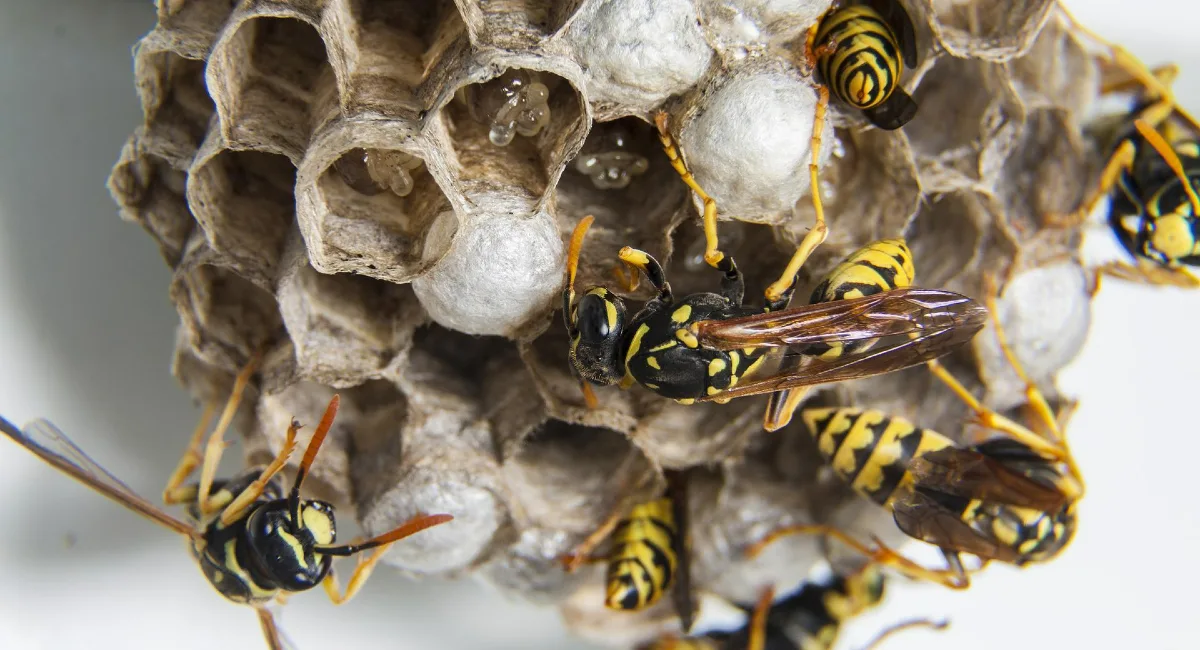
Yellowjackets and paper wasps are the most common stingers we see in local landscapes. Yellowjackets often build underground nests in old vole holes, compost piles, or loose soil near stone walls—exactly where gardeners might dig or edge. Paper wasps, on the other hand, favor sheltered areas like eaves, tool sheds, or dense shrubs.
Common Nesting Spots in Seacoast Gardens
In Portsmouth’s South End or along Rye’s coastal neighborhoods, nests are often hidden within ornamental hedges or under overhangs, where warmth and protection meet easy access to nectar. At Seacoast Gardener, we’ve learned to scan every shrub and structure before beginning pruning work. A quick visual check saves time—and prevents unpleasant surprises.
Spotting Warning Signs Before You Disturb a Nest
If you notice a sudden increase in wasp activity around one spot, stop and observe from a distance. Look for a steady traffic pattern of insects flying in and out of a small opening in the ground or shrub. Listen for consistent buzzing that doesn’t fade after a few seconds.
When a nest is nearby, avoid vibrations or rapid movement. Raking, trimming, or even setting down a wheelbarrow too close can alert the colony. If disturbed, step away slowly—don’t swat or wave your arms, as sudden gestures are seen as threats. Mark the area with a flag or stick so you can steer clear until it’s handled safely.
Gardening Safely During Peak Wasp Season
Simple precautions go a long way. Wear light-colored clothing and avoid floral prints, which attract wasps. Skip perfumes or scented lotions that mimic nectar. Gloves and long sleeves protect against accidental contact when reaching into dense shrubs or weeding near the ground.
When pruning hedges or shaping shrubs, start with slow, deliberate motions and keep an ear open for increased buzzing. If you find a nest mid-task, stop immediately. The team at Seacoast Gardener follows this same careful routine when maintaining landscapes from Exeter to Hampton, especially during late summer maintenance.
Understanding Their Role in the Garden
While they can be intimidating, yellowjackets and wasps play an important role in the ecosystem. Earlier in the season, they help manage garden pests by feeding on caterpillars, aphids, and other insects that damage plants. A balanced population is beneficial—just not when they build nests too close to walkways or work areas.
When nests become a safety concern, avoid using broad insecticides that harm pollinators. Instead, call a licensed pest control specialist for targeted removal. Once the nest is gone, Seacoast Gardener can safely resume pruning, mulching, or soil repair to restore the space and keep your landscape healthy.
Timing Your Garden Work Wisely
Wasp and yellowjacket activity naturally declines as temperatures drop in late fall. Most colonies die off after the first hard frost, leaving only fertilized queens to overwinter. For gardeners, this means November is typically a safer window for structural pruning, shrub rejuvenation, and other larger landscape projects.
At Seacoast Gardener, we often schedule late fall visits for pruning ornamental trees and shaping hedges—after the risk of stings has passed but before deep winter arrives. This timing not only protects our team but also supports plant health by aligning pruning with dormancy.
Preventing Future Nesting Problems
Once a nest has been removed, prevention becomes the next step. Keep compost bins sealed, fill in burrows that could become nesting spots, and regularly tidy overgrown shrubs or stacked garden debris. A clean, well-maintained landscape discourages wasps from setting up residence next year.
Adding mulch and maintaining good airflow around dense shrubs not only benefits plant health but also makes potential nesting areas less attractive. Our fine-gardening services include careful pruning, soil improvement, and seasonal cleanup—all of which support a balanced garden ecosystem where beneficial insects thrive but stinging pests are less likely to take over.
A Safer, More Enjoyable Garden Season
Gardening during yellowjacket season doesn’t mean you have to stay indoors—it just calls for awareness and preparation. By learning to recognize nest activity and timing your garden tasks wisely, you can protect yourself and keep your landscape thriving.
If your late-summer maintenance includes pruning, hedge trimming, or cleanup, let the experienced team at Seacoast Gardener handle it with care. We’re familiar with local conditions, seasonal insect behavior, and the best safety practices for coastal landscapes.
Whether your property is in Rye, Portsmouth, Exeter, or along the Hampton shoreline, we’ll help you maintain a healthy, beautiful garden—all while keeping safety front and center.
Contact Information:
Seacoast Gardener — (603) 770-5072 | seacoastgardener.com
Expert Pruning — (603) 996-3867 | expertpruning.com