Bring that Cape Cod Hydrangea Vibe to the Seacoast
Hydrangeas for Seacoast New Hampshire Gardens
A Practical Guide to Hydrangea Care, Planting, and Pruning in Zone 6b
Hydrangeas are one of the most versatile and reliable flowering shrubs for coastal New Hampshire and southern Maine gardens when they are planted correctly and pruned according to type. From classic blue and pink mophead hydrangeas softening foundations in Portsmouth and Rye, to panicle hydrangeas anchoring mixed borders in Greenland, Exeter, and Kittery, hydrangeas provide long bloom periods, strong structure, and dependable summer color.
Most hydrangea problems we see professionally—poor flowering, floppy growth, or winter damage—are not caused by unhealthy plants. They are almost always the result of pruning at the wrong time, poor siting, or choosing the wrong hydrangea type for the space. When hydrangeas are matched to local conditions and pruned properly, they are long-lived shrubs that perform consistently with relatively low maintenance.
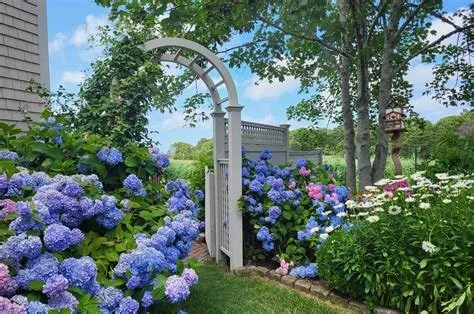
Cape Cod Hydrangeas and Seacoast Gardens
Many homeowners in coastal New Hampshire ask for “Cape Cod hydrangeas,” picturing classic blue mophead hydrangeas surrounding shingled homes and seaside cottages. These hydrangeas thrive on Cape Cod’s slightly warmer, more stable winters, where flower buds are less likely to be damaged by cold.
Along the New Hampshire Seacoast, colder and more variable winters make traditional mopheads less reliable. In protected locations they can perform well, but for consistent blooms in Portsmouth, Rye, and southern Maine, panicle and cold-hardy mountain hydrangeas often deliver the same coastal look with better long-term performance.
Choosing the Right Hydrangea for Your Landscape
Successful hydrangea care starts with choosing the right hydrangea type for the job. In Seacoast New Hampshire gardens, panicle hydrangeas (Hydrangea paniculata) and smooth hydrangeas (Hydrangea arborescens) are the most reliable because they bloom on new wood and tolerate winter temperature swings common in Zone 6b. Bigleaf and mountain hydrangeas offer the iconic blue and pink flowers many homeowners want, but they require more careful siting and pruning to flower reliably year to year.
We frequently see hydrangeas selected based on flower color alone, without considering mature size, sun exposure, or bloom habit. This often leads to plants that outgrow their space or fail to bloom. Choosing a hydrangea that naturally fits its location reduces pruning needs, improves structure, and results in stronger stems and better flowering over time.
Light, Soil, and Planting Considerations
Hydrangeas grow best in morning sun with afternoon shade, especially in coastal New Hampshire where reflected heat, wind exposure, and summer dry periods can stress plants. Panicle hydrangeas tolerate more sun and are well suited to open exposures, while bigleaf and mountain hydrangeas benefit from protection during the hottest part of the day. Too much shade leads to weak growth, fewer flowers, and poor overall performance.
Soil should be well-drained, moisture-retentive, and amended with organic matter. Hydrangeas are more adaptable to soil pH than azaleas, but they still benefit from consistent moisture during establishment and extended summer dry spells. Hydrangeas should always be planted at the same depth they were growing in the container, never buried deeper, and mulched to stabilize soil temperature and moisture—two key factors in long-term success.
Pruning Hydrangeas the Right Way
Pruning hydrangeas correctly depends entirely on understanding when the plant forms flower buds. Panicle and smooth hydrangeas bloom on new wood, meaning they can be pruned in late winter or early spring without sacrificing flowers. Bigleaf and mountain hydrangeas bloom primarily on old wood, so pruning at the wrong time removes the buds responsible for summer blooms.
For panicle and smooth hydrangeas, spring pruning focuses on thinning crowded stems, improving structure, and controlling size while encouraging strong flowering growth. Bigleaf and mountain hydrangeas require a lighter approach—primarily removing dead wood and making minimal shaping cuts after flowering. In many cases, restrained pruning produces better flowering and stronger plants than aggressive cutting.
Renovating Overgrown or Poorly Flowering Hydrangeas
Hydrangeas that have been pruned incorrectly for years or allowed to outgrow their space often benefit from a staged renovation approach. Removing older, weaker stems at the base over multiple seasons improves air circulation, restores natural structure, and encourages healthier flowering without placing unnecessary stress on the plant.
One-time hard cutbacks can quickly reduce size, but they often lead to weak stems, floppy growth, and inconsistent flowering. For residential properties in the New Hampshire Seacoast, gradual renovation produces better long-term results and a more attractive plant throughout the recovery process.
Seasonal Hydrangea Care for Coastal New Hampshire
Spring: Prune appropriate hydrangea types, refresh mulch, fertilize lightly if needed
Summer: Water deeply during extended dry periods; avoid late pruning
Hydrangea Care, Pruning, and Renovation by Seacoast Gardener
Seacoast Gardener and Expert Pruning provide professional hydrangea care, pruning, and renovation throughout Portsmouth, Rye, North Hampton, Exeter, Greenland, Stratham, and coastal southern Maine. We work with all hydrangea types, from small foundation plantings to large mixed borders and established landscapes.
Our hydrangea services include:
Expert hydrangea pruning based on bloom type, structure, and long-term performance
Renovation of overgrown or poorly flowering hydrangeas
New hydrangea installation with correct spacing, soil preparation, and siting
Diagnosis of bloom failure, wilting, winter damage, and structural problems
If your hydrangeas are not blooming, flopping over, or have outgrown their space, we can help. Our approach focuses on long-term plant health and reliable flowering—not short-term fixes or constant corrective maintenance.
📞 (603) 770-5072 | 🌐 www.seacoastgardener.com