Top 5 Cold-Tolerant Annuals to Plant in April (Start Now!)
Top 5 Cold-Tolerant Annuals to Plant in April
April along the Seacoast is a season of contradictions. The light is generous, the soil is beginning to wake up, and the impulse to plant is strong — but the temperatures are not yet predictable, and a late frost is never out of the question in Zone 6b. The good news is that not every annual needs warm soil and settled weather to perform well. A handful of cold-tolerant annuals thrive in exactly these conditions, giving you early color, texture, and life in the garden weeks before summer bedding plants are safe to go in the ground.
Why Plant Annuals in April?
Getting annuals in the ground early does more than satisfy the urge to garden. It gives plants time to establish root systems before summer heat arrives, fills in gaps left by slow-emerging perennials, and creates a layered, finished look that carries beds through the awkward in-between weeks of spring. In the fast-draining, sandy soils common in North Hampton, Hampton Falls, and Stratham, early-season annuals also help suppress weeds before the main flush of germination hits in May.
The key is selecting annuals that are genuinely cold-hardy — varieties that tolerate light frost, cool nights, and the brisk salt-edged winds that sweep inland from the water through mid-spring.
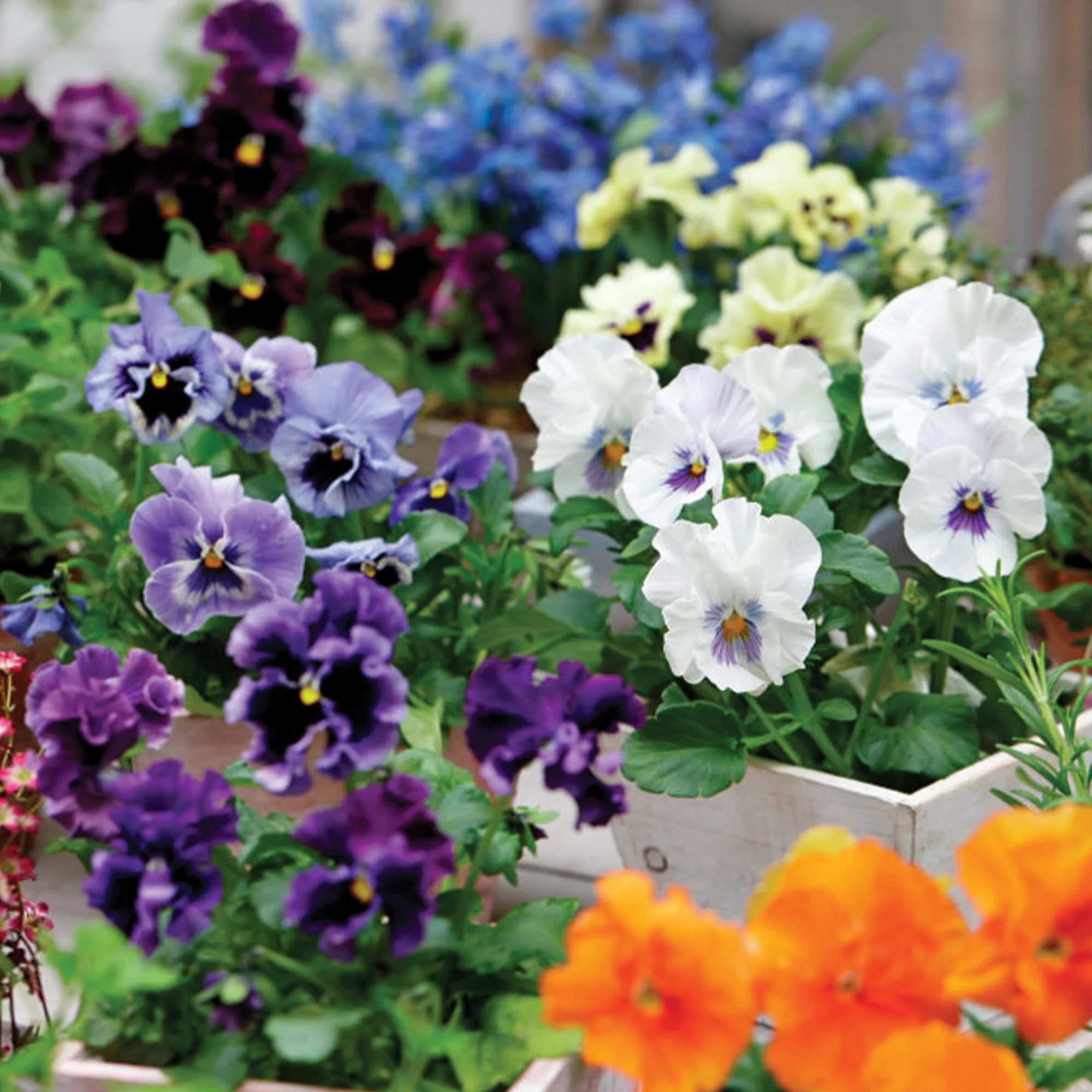
1. Pansies (Viola × wittrockiana)
Pansies are the quintessential cool-season annual, and for good reason. They begin flowering in near-freezing temperatures, tolerate light frost without damage, and offer a color range — from deep violet and burgundy to soft yellow and white — that looks composed and intentional rather than cheerful-by-default. In Seacoast gardens from Portsmouth to Kittery, pansies planted in early April will bloom steadily through May and into June before the heat causes them to falter.
Plant in full sun to part shade, amend with compost if your soil is particularly lean, and deadhead spent flowers every week or so to keep the display going. When summer arrives, pull them and replace with heat-tolerant annuals in the same spots.
2. Snapdragons (Antirrhinum majus)
Snapdragons are underused as cool-season annuals, and that is a missed opportunity. They tolerate frost, perform best in cool weather, and bring verticality and texture to beds and borders that pansies and violas simply cannot. Taller varieties work beautifully at the back of a mixed border; dwarf types are excellent in containers or along path edges in cottage-style gardens.
In Rye, Exeter, and New Castle — where spring gardens often need structure as much as color — snapdragons earn their place early and hold it well into June. Start seeds indoors in February or purchase transplants from a local nursery; plant out in early April and they will reward you quickly.
3. Larkspur (Consolida spp.)
Larkspur is a direct-sow annual that actually benefits from cold soil, making April the ideal planting window along the Seacoast. Scatter seeds directly into prepared beds, press them in lightly, and let the cool temperatures do the work — germination is often better with a chill than without it. The resulting plants are airy, upright, and elegant, with spikes of blue, purple, pink, or white that look as though they belong in a cutting garden or a perennial border.
Larkspur does not transplant well, so direct sowing is the right approach. In the sandy, well-drained soils of Greenland and Newington, it naturalizes readily and may self-sow year after year if you allow a few plants to go to seed.
4. Nemesia (Nemesia spp.)
Nemesia is less familiar to many gardeners than pansies or snapdragons, but it deserves a place in more Seacoast gardens. It produces small, orchid-like flowers in warm two-tone combinations — coral and cream, purple and white, soft orange and yellow — and it handles cool temperatures and coastal breezes with ease. It is particularly effective in containers, window boxes, and raised beds where its mounding, slightly trailing habit creates a soft, full edge.
Plant in full sun with good drainage, and expect strong performance through late spring and into early summer. Like most cool-season annuals, it will slow down as temperatures climb, but a light trim and consistent moisture can extend the season meaningfully in partially shaded spots.
5. Stock (Matthiola incana)
Stock is one of those plants that earns its keep through fragrance as much as appearance. The spikes of densely packed flowers — in shades of lavender, dusty rose, cream, and deep burgundy — are beautiful, and the scent on a mild spring evening is extraordinary. It is a genuine cool-season performer, preferring temperatures between 45 and 65 degrees Fahrenheit, which maps almost perfectly onto April and May conditions throughout the Seacoast region.
Direct sow or transplant stock into full sun with well-amended soil. In North Hampton and Hampton where garden beds often face open sky and sea wind, stock's sturdy stems hold up well, and the fragrance carries beautifully in a coastal breeze.
Getting Your Beds Ready for Early Planting
None of these annuals will perform well in compacted, nutrient-depleted, or weed-choked soil. Before planting, take the time to loosen beds to a depth of eight to ten inches, incorporate two to three inches of finished compost, and clear any weeds that have germinated during the warm spells of late March. In coastal gardens that saw significant salt spray this past winter, flush beds with fresh water if possible and allow them to drain before adding organic matter — salt accumulation in sandy soils is real, and it matters.
Fresh mulch applied after planting — two to three inches of composted bark or wood chip — will retain moisture, moderate soil temperature, and keep early-season weeds in check through May.
Let Seacoast Gardener Help You Start Strong
If the thought of bed preparation, soil amendment, and early planting feels like more than you want to manage on your own, Seacoast Gardener is here to help. We work with homeowners throughout Portsmouth, Rye, Exeter, North Hampton, Hampton Falls, Newmarket, Eliot, and South Berwick, providing hands-on seasonal garden care that sets properties up for a genuinely beautiful growing season. From spring bed prep and mulching to shrub pruning and ornamental plant care, we bring the same precision and plant knowledge to every property we touch.
Call Seacoast Gardener today at (603) 770-5072 to schedule a spring consultation. Let us help your garden hit the ground running — starting right now, in April, when it matters most.