Sharp Tools: Winter Maintenance Homeowners Often Skip
Sharp Tools Work Better: Winter Maintenance That Saves Money and Plants
January is tool maintenance season on the New Hampshire Seacoast. With garden beds frozen and active pruning paused, winter offers the perfect opportunity to care for the tools that do the real work all season long. Professional gardeners use this time to sharpen blades, disinfect cutting surfaces, oil moving parts, condition wooden handles, and reset their tool systems before spring arrives. Sharp, clean, well-maintained tools don’t just feel better in your hands — they make cleaner cuts, reduce physical strain, and protect plant health at every step. When cared for properly, quality tools last decades rather than wearing out after just a few seasons.
Most homeowners unknowingly work with tools that are dull, dirty, or partially broken. Pruners that crush stems instead of slicing them cleanly. Loppers that require excessive force and leave ragged cuts. Pruning saws clogged with dried sap and debris from last season. These tools don’t simply slow you down — they actively harm plants by creating wounds that heal slowly and invite disease. Winter is the best and safest time to correct these issues, before plants are growing and vulnerable and before spring work demands efficiency.
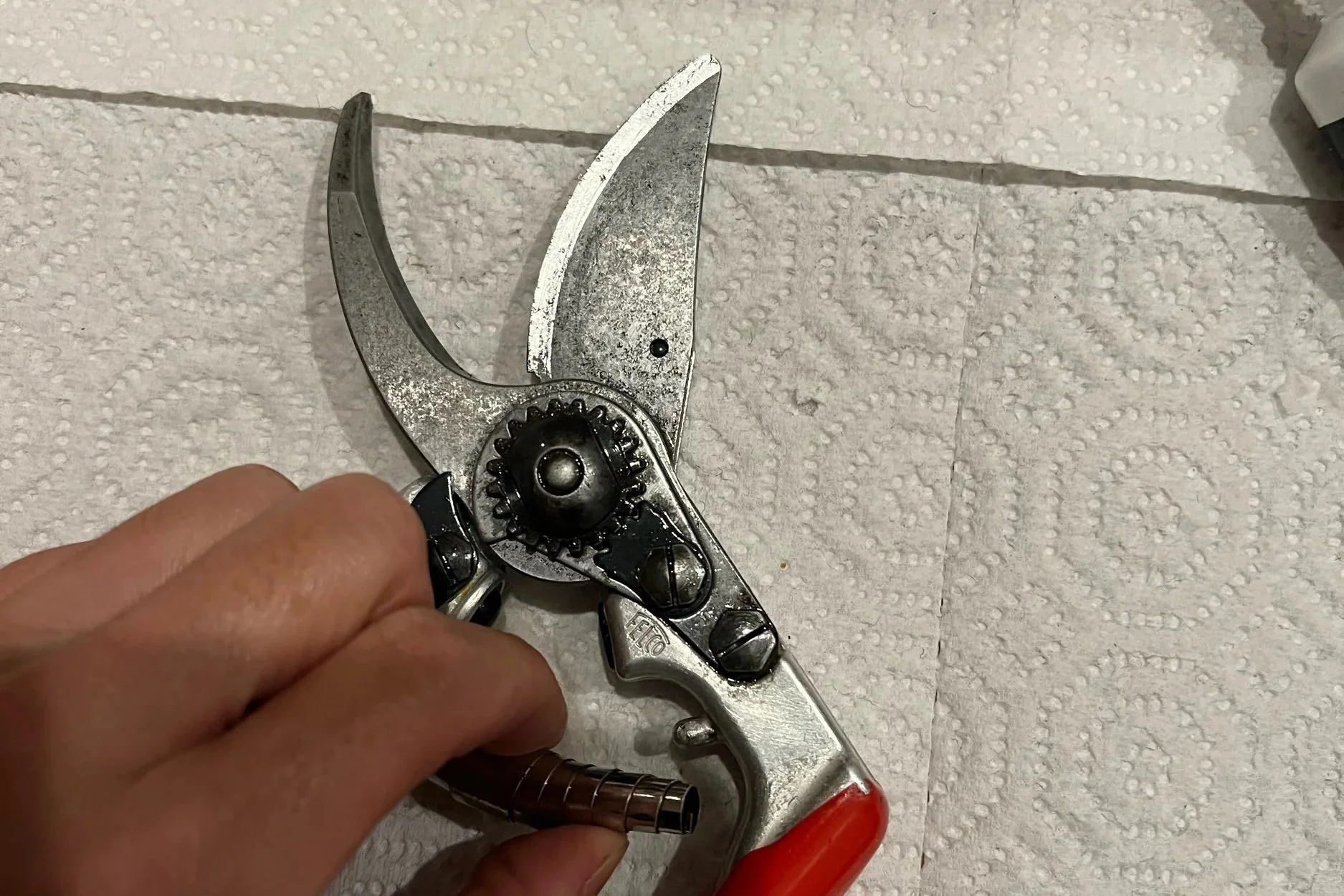
A Well-Maintained Tool - Better Than New
A properly maintained garden tool does most of the work for you. Sharp pruners close smoothly and slice cleanly without forcing your hand. Loppers cut through branches with steady pressure instead of jerking or crushing. Saw blades glide through wood without binding or tearing. If a cut requires strain, twisting, or repeated effort, the tool—not the plant—is the problem. Good tools feel controlled, balanced, and predictable in use.
Sharpening: The Difference Between Cutting and Crushing
Sharp blades slice cleanly through plant tissue. Dull blades crush it. That difference matters more than most gardeners realize. Crushed tissue heals slowly, increases stress, and creates uneven wound edges that allow pathogens to enter. Clean cuts seal faster, reduce moisture loss, and support healthy regrowth. In Zone 6b, where plants already face freeze–thaw stress and coastal wind exposure, minimizing unnecessary damage becomes even more important.
A properly sharpened bypass pruner should cut a half-inch stem with minimal pressure. If you find yourself squeezing hard or rocking the tool to finish a cut, the blade is dull. Bypass pruners and loppers have a single sharpened blade that passes by a thicker anvil. Only the beveled cutting edge should be sharpened — never the flat side. Using a whetstone or diamond file, follow the existing bevel angle, typically 20 to 30 degrees. Make smooth, controlled strokes in one direction from base to tip. After several passes, the blade should feel sharp and free of flat spots or nicks.
Pruning saws require a different approach. Many modern folding saws and Japanese pull saws are designed with hardened teeth and are not intended to be sharpened. Once dull, they should be replaced. Traditional western push saws can be sharpened with the correct triangular file, but this takes practice and precision. For most homeowners, replacing a worn blade is more reliable than attempting a repair that may worsen cutting performance.
Hedge shears and grass shears take more abuse than pruners and often develop uneven edges. These should be sharpened patiently with a mill file, keeping the original bevel intact. Once finished, test blades by slicing paper. A clean, effortless cut confirms the edge is ready.
Cleaning and Disinfecting: Preventing Disease Spread
Garden tools are one of the most common — and overlooked — ways disease spreads through landscapes. Sap, soil, and plant residue can harbor fungal spores, bacteria, and viruses long after a problem plant has been removed. Without proper cleaning, a single contaminated cut can transfer disease to healthy shrubs and trees across the garden. Winter deep-cleaning eliminates accumulated pathogens and prevents spring transmission when growth resumes.
Begin by removing all visible debris. Use a stiff brush, steel wool, or coarse cloth with warm soapy water to scrub blades, handles, and pivot points. Hardened sap often requires rubbing alcohol or citrus-based cleaners. Pay close attention to joints and springs, where buildup causes tools to bind and wear prematurely.
After physical cleaning, disinfect cutting surfaces. A 10 percent bleach solution, 70 percent rubbing alcohol, or a household disinfectant is effective. Wipe blades thoroughly or dip them briefly, then rinse with clean water and dry immediately to prevent corrosion. For tools used on diseased plants during the growing season, a longer soak provides additional protection. This step is especially important when pruning shrubs prone to fungal issues common in humid Seacoast summers.
Oiling and Rust Prevention
Once tools are clean and dry, protecting the metal is essential. Apply a light coat of oil to blades, springs, bolts, and pivot points. Light machine oil or specialty tool oil works well. Wipe away excess to avoid attracting dust, but leave a thin film that prevents rust during winter storage and keeps moving parts operating smoothly.
Wooden handles benefit from seasonal conditioning. A thin coat of linseed oil or handle wax prevents drying, cracking, and splintering — a common issue during New England winters when indoor air is dry. Allow the oil to soak briefly, then wipe off excess. This simple step dramatically extends handle life. While oiling, check for loose bolts or cracked handles and address them now rather than mid-season when failures are inconvenient and potentially dangerous.
Organizing for Efficiency
Even the sharpest tools lose value if they’re hard to find. Winter is when professionals organize tool storage so everything has a designated place and is ready when work begins. Wall-mounted racks, pegboards, and labeled hooks keep tools visible and dry. Grouping tools by function — pruning, digging, cleanup — improves efficiency and reduces unnecessary wear from improper use.
This is also the time to take inventory. Identify tools that need replacing, upgrades you wished you had last season, or duplicates that no longer serve a purpose. Purchasing quality replacements during winter avoids rushed decisions when spring demand peaks. Well-chosen tools, maintained properly, become long-term investments rather than recurring expenses.
The Tools and Sharpeners That Keep Garden Equipment Working
Keeping garden tools sharp and functional doesn’t require a workshop or expensive equipment. A small, well-chosen set of maintenance tools is enough to handle nearly all routine care for pruners, loppers, shears, and saws used in Seacoast gardens. The goal is consistency, not perfection—regular light maintenance prevents heavy repairs later and extends tool life dramatically.
A diamond hand file or fine whetstone is the most versatile sharpening tool for homeowners. Diamond files work well even on hardened steel and stay effective longer than traditional stones. A small mill file is useful for hedge shears and larger blades, while a stiff wire brush or steel wool helps remove sap, rust, and debris before sharpening. Sharpening always works best on clean metal.
For cleaning and disease prevention, rubbing alcohol or a diluted bleach solution is essential. These disinfect cutting surfaces and reduce the spread of fungal and bacterial issues between plants. Light machine oil or a dedicated tool oil protects metal from rust and keeps pivot points moving smoothly through winter storage. For wooden handles, boiled linseed oil or handle wax prevents cracking and splintering during dry New England winters.
Finally, simple organization matters. A dedicated tool rack, pegboard, or storage bin keeps sharpened tools from dulling against each other and makes maintenance more likely to happen. When tools are easy to access and ready to use, gardeners are far more likely to work efficiently and make clean, confident cuts that protect plant health.
The Professional Standard
Professional gardeners maintain tools meticulously because sharp, clean equipment saves time, reduces fatigue, and produces better results. Clean cuts heal faster. Well-balanced tools reduce strain on hands and shoulders. Organized systems improve workflow and safety. These same benefits apply to homeowners who take tool care seriously.
Set aside a winter afternoon to sharpen everything that cuts, clean everything that touched plants, oil all metal surfaces, and organize storage thoughtfully. When spring arrives in Portsmouth and along the Seacoast, you’ll begin the season prepared, efficient, and confident — working with your tools rather than fighting them.
Professional Garden Care with Professional-Grade Tools
At Seacoast Gardener and Expert Pruning, we maintain our tools to professional standards because plant health depends on clean, precise cuts. Our crews arrive ready for efficient, high-quality work that protects shrubs, ornamental trees, and gardens for the long term. If you need professional pruning, installation, or seasonal care, we bring both the expertise and the equipment required to do the job right.
📞 (603) 770-5072 | 🌐 www.seacoastgardener.com