Mulching for Moisture and Weed Control: The March Sweet Spot
Mulching for Moisture and Weed Control: The March Sweet Spot
There is a narrow window in early spring when mulching does more good than at almost any other time of year — and most gardeners miss it. By the time the forsythia is blooming and the daffodils are fully open, the moment has already passed. Along the Seacoast of New Hampshire and southern Maine, that window falls in March, and understanding why it matters can make a meaningful difference in how your garden performs all the way through August.
Why March Is the Right Time
The logic behind March mulching comes down to soil temperature and weed biology. In Zone 6b, the soil begins to warm from the surface down as daylight lengthens in late winter. Weed seeds — millions of them, already present in virtually every garden bed — are triggered to germinate by that warming soil and the increased light that comes with it. Getting mulch down before that germination begins is one of the most effective things you can do to reduce your weeding workload for the entire season.
At the same time, March mulch helps moderate the freeze-thaw cycles that are still very much a reality along the coast through mid-spring. In the sandy, fast-draining soils common in North Hampton, Stratham, and Greenland, those temperature swings can heave shallow-rooted perennials and bulbs out of the ground. A two-to-three-inch layer of mulch insulates the soil surface and buffers those swings before they do damage.
What Mulch Does (and What It Does Not Do)
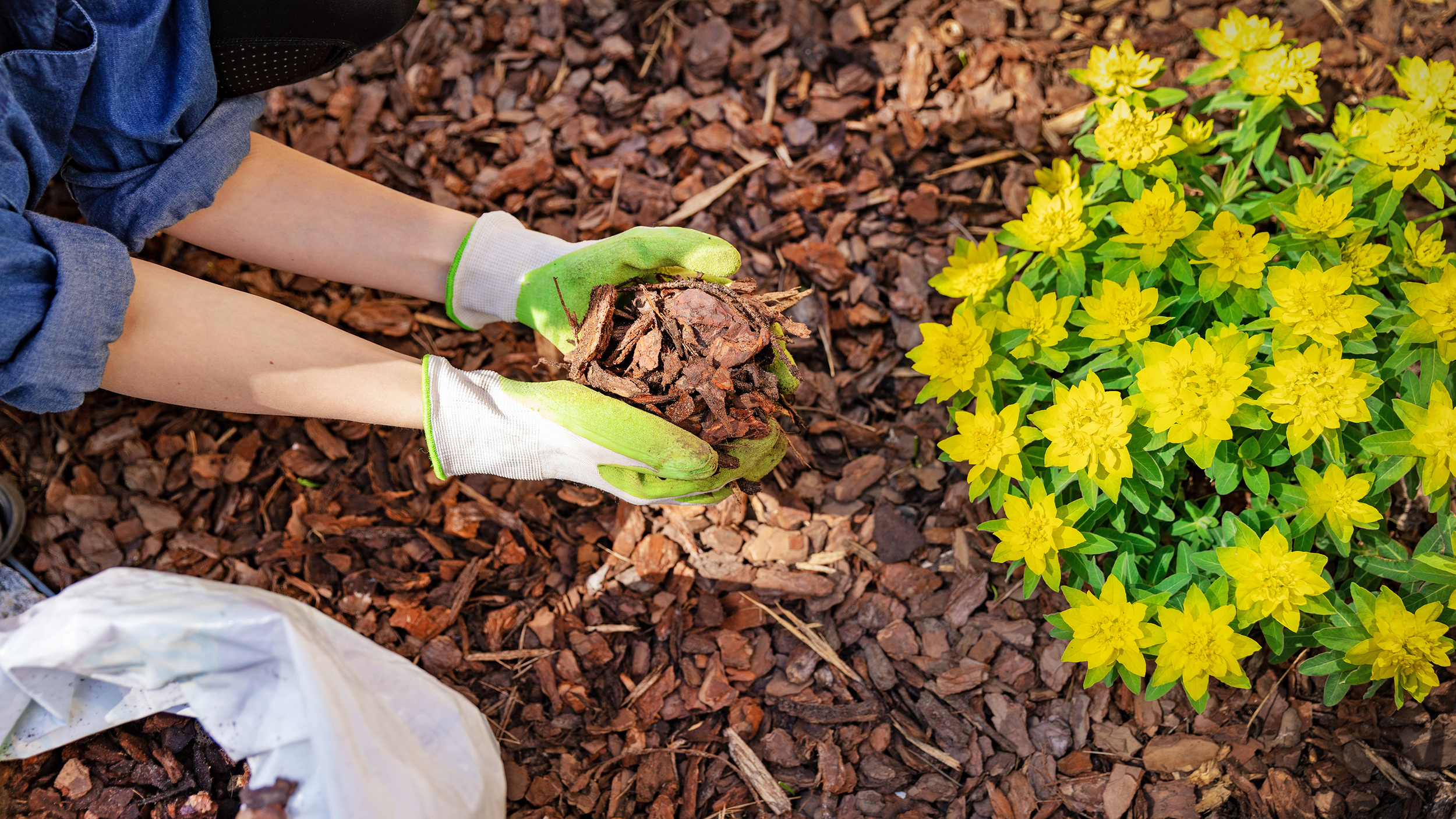
Mulch is one of the most misunderstood tools in the garden. It is not simply decorative, though a freshly mulched bed does look composed and cared for in a way that bare soil never quite achieves. Its primary functions are practical: it suppresses weed germination by blocking light, retains soil moisture by reducing surface evaporation, moderates soil temperature, and breaks down slowly to feed soil biology over time.
What mulch does not do is solve a weed problem that already exists. If your beds went into winter with a strong population of bittercress, chickweed, or creeping speedwell, those plants need to come out before mulch goes down — not after. Mulching over established weeds simply traps moisture around them and gives them a comfortable place to continue growing. In gardens throughout Portsmouth, Rye, and Exeter, we see this mistake repeatedly, and it is one of the most preventable sources of frustration in the spring garden.
Choosing the Right Mulch for Seacoast Conditions
Not all mulch performs equally, and the right choice depends on your soil type, the plants you are mulching around, and how much breakdown you want to see in a single season. For most ornamental beds and mixed borders along the Seacoast, composted wood chip or shredded bark is the practical standard — it is stable, attractive, breaks down at a moderate rate, and does not compact into an impermeable mat the way fine wood shavings or sawdust can.
Avoid fresh, uncomposted wood chip directly against perennials and shrubs. As it breaks down, it consumes nitrogen from the soil surface, which can temporarily stress plants in an already lean, sandy substrate. Composted material has already passed through that breakdown process and will feed rather than deplete. For vegetable gardens and cutting beds, a lighter mulch — straw, salt marsh hay, or shredded leaves — is preferable because it incorporates more easily at the end of the season.
The Right Depth and the Volcano Problem
Two to three inches is the right depth for ornamental beds in most Seacoast gardens. Less than that and you lose meaningful weed suppression; more than that and you risk smothering shallow roots, trapping moisture against crowns, and creating conditions where fungal disease can develop. The goal is a consistent, even layer that covers the soil surface without burying anything.
The single most common mulching mistake — and one worth naming directly — is the mulch volcano: a thick cone of material piled against the base of a tree or shrub trunk. It is extremely common in gardens from South Berwick to Hampton, and it causes genuine long-term damage. Constant moisture against bark invites rot, disease, and opportunistic insects. Pull mulch back two to four inches from any woody stem, keep it level, and let the crown breathe.
How to Mulch a Bed Properly in March
The sequence matters as much as the material. Work through your beds in this order and the result will hold well through the entire growing season.
Weed first, thoroughly. Pull or hoe any germinated weeds and remove as much root as possible from tap-rooted species like dandelion.
Edge cleanly. A crisp bed edge cut with a half-moon edger or spade keeps mulch in place and gives the finished bed a polished, intentional look.
Apply compost if needed. If your soil is lean or compacted, a half-inch layer of finished compost worked lightly into the surface before mulching will feed the soil and improve structure over the season.
Spread mulch evenly at two to three inches. Work around crowns and pull back from all woody stems.
In coastal gardens that experienced significant salt spray this winter — particularly in Rye, New Castle, and along the Hampton Beach corridor — consider a light flush of fresh water over beds before mulching, and choose a mulch that will buffer rather than compound any sodium accumulation in the soil.
The Payoff Through Summer
Gardeners who mulch well in March consistently spend less time weeding in June and July, lose less soil moisture during the dry spells that arrive reliably each August along the Seacoast, and see stronger, more uniform growth from perennials and shrubs. It is the kind of early-season investment that pays compound interest through the entire growing season, and it is one of the clearest examples of how good timing makes technique more effective.
A bed that is properly mulched in March looks managed from the first warm day forward. It sets a tone — for the garden and for the season — that is hard to establish any other way.
Let Seacoast Gardener Handle the March Work
Spring bed preparation, weeding, and mulching are among the most time-sensitive tasks of the gardening year, and they are also among the most labor-intensive. If you would rather spend your March Saturdays enjoying the garden than working through it, Seacoast Gardener is ready to help. We serve homeowners throughout Portsmouth, Rye, North Hampton, Hampton Falls, Exeter, Newmarket, Eliot, and South Berwick, providing seasonal garden care that is timed to the Seacoast's specific conditions and done with the precision that keeps fine gardens looking their best year after year.
Call Seacoast Gardener today at (603) 770-5072 to schedule your spring mulching and bed preparation. The window is open right now — let us help you make the most of it.