Feeding Annuals for Continuous Bloom
How the Right Fertilizing Routine Keeps Your Portsmouth Garden Colorful All Season Long
There is nothing quite like a garden that holds its color from the first warm days of summer straight through to fall. Annuals make that possible, but they do not do it on their own. Unlike perennials and shrubs that have established root systems drawing from a larger volume of soil, annuals are working hard all season long to produce as much flower and foliage as they can in a single growing year. In Portsmouth, New Hampshire, where summers are warm, coastal breezes are constant, and the growing season has a defined beginning and end, feeding annuals consistently is one of the most impactful things a homeowner can do to keep the garden looking its best.
Most gardeners plant annuals in late spring and enjoy a flush of early color, then watch that color slowly fade as summer progresses. The plants are not failing. They are simply running out of what they need to keep performing at a high level. Understanding how and when to feed changes that entirely.
Why Annuals Need More Feeding Than You Might Expect
Annuals are engineered by nature to grow fast, bloom hard, and set seed before the season ends. That pace of growth demands a steady and consistent supply of nutrients, particularly nitrogen for foliage, phosphorus for root development and flowering, and potassium for overall plant strength and resilience. A garden bed that was well prepared in spring still becomes depleted over the course of a long summer as plants draw from the soil and as watering and rainfall wash nutrients through.
In Portsmouth gardens, where sandy or well drained coastal soils are common, nutrient depletion happens faster than in heavier inland soils. The same drainage that keeps roots healthy also moves nutrients through more quickly. Regular feeding is not optional in these conditions. It is simply part of what keeps annuals performing at the level most homeowners are hoping for when they plant them.
Starting With a Slow Release Foundation
The most efficient approach to feeding annuals combines two methods working together. At planting time, or early in the season if plants are already in the ground, working a slow release granular fertilizer into the top few inches of soil gives plants a steady baseline of nutrition that releases gradually over several weeks. This is the foundation that supports consistent growth without requiring attention every few days.
A balanced granular fertilizer with roughly equal parts nitrogen, phosphorus, and potassium works well for most annuals in mixed beds and containers. Follow the label rates carefully. More fertilizer does not mean more flowers. It often means excessive foliage, weaker stems, and plants that are more vulnerable to stress and disease.
Adding Liquid Fertilizer Through the Season
The slow release foundation gets plants growing steadily, but liquid fertilizer is what keeps them blooming through the heat of summer. Every two to three weeks through the growing season, a diluted liquid fertilizer applied either as a soil drench or a foliar feed gives annuals a readily available boost of nutrition that kicks in quickly and supports continuous flower production.
Water soluble fertilizers formulated for flowering plants tend to be slightly higher in phosphorus, which encourages blooming rather than pushing excessive leafy growth. In Portsmouth gardens where homeowners want color from containers, window boxes, and annual beds right through September, this midseason feeding routine makes a visible and consistent difference. Plants that are fed on a regular schedule simply look fuller, bloom more densely, and recover from heat stress far more gracefully than those that are left to fend for themselves after planting.
Grooming Goes Hand in Hand With Feeding
Fertilizing works best when it is paired with regular grooming. Deadheading spent blooms, trimming back plants that have become leggy, and removing any yellowing or damaged foliage all help direct the plant's energy toward producing new flowers rather than maintaining old ones or setting seed. A well fed annual that is also regularly groomed will bloom more continuously and look more composed throughout the season.
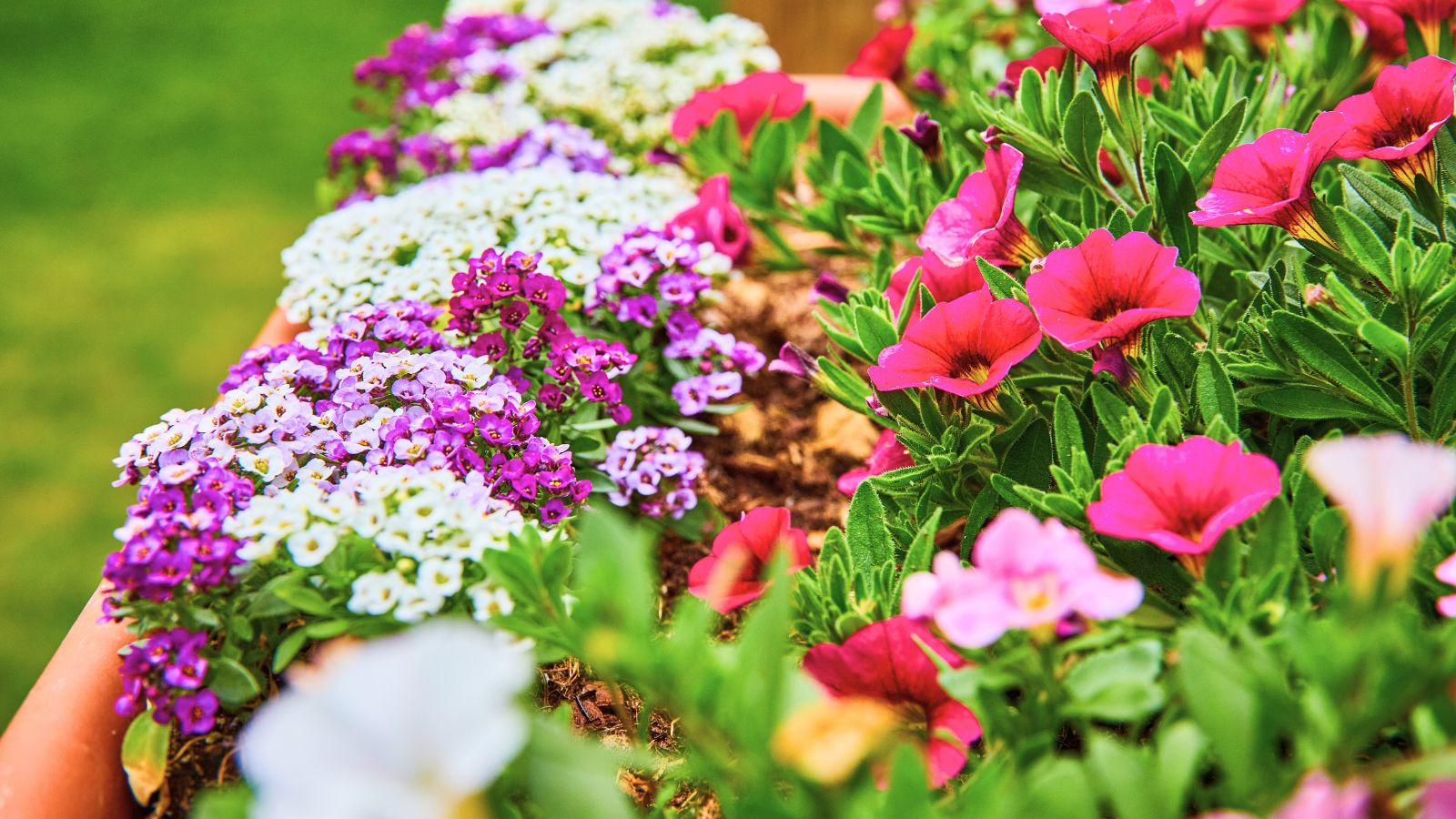
Many of the most popular annuals in Seacoast gardens, including petunias, calibrachoa, zinnias, and verbena, respond beautifully to a light midseason trim combined with a fresh round of liquid fertilizer. Within ten days to two weeks, the difference is usually quite striking. New growth flushes out, bud set increases, and the whole planting takes on a fresh and cared for appearance that carries right through to fall.
Watching for Signs That Feeding Is Off
Plants will tell you when something is not right if you know what to look for. Pale or yellowing foliage on annuals that should be a deep healthy green often signals a nitrogen deficiency, which is common in fast draining soils as summer progresses. Reduced flowering despite healthy looking foliage can suggest that phosphorus levels have dropped. Poor stem strength and a general look of decline through the heat of summer often points to potassium running low.
Adjusting your feeding schedule or switching to a fertilizer formulation that addresses a specific deficiency can turn a struggling bed around relatively quickly. Annuals are responsive plants, and they reward attentive care with fast and visible results.
Feeding as Part of a Cared for Summer Garden
A Portsmouth garden that holds its color and composure all summer long does not happen by accident. It reflects consistent attention, the right inputs at the right time, and an understanding of what plants actually need to keep performing rather than simply surviving. Feeding annuals on a thoughtful schedule is one piece of that picture, working alongside proper watering, mulching, and seasonal grooming to create a landscape that looks genuinely beautiful through every warm month.
If you would like help keeping your garden at its best this season, Seacoast Gardener provides professional fine gardening services throughout Portsmouth and the surrounding communities of the New Hampshire Seacoast and Southern Maine. From seasonal shrub care and ornamental tree pruning to weeding, mulching, and hands on garden maintenance, our team brings the kind of consistent attention that keeps landscapes healthy, colorful, and composed all season long.
📞 (603) 770-5072 | 🌐 www.seacoastgardener.com