Early Fall Containers in North Hampton: Mums, Grasses, and Asters That Actually Last
Early Fall Containers in North Hampton: Mums, Grasses, and Asters That Actually Last
The light changes first. Before the maples turn along Atlantic Avenue, before the first frost warning shows up on the evening forecast, the September sun drops lower and everything in your containers starts to look a little tired. The petunias have gone leggy. The calibrachoa is more stem than flower. This is the moment most homeowners either give up on their pots until spring, or run to the garden center and buy the biggest mum they can find.
There is a better way, and it starts with thinking about fall containers as a real planting rather than a temporary decoration.
Why Fall Containers Work So Well on the Seacoast
North Hampton sits in a sweet spot. We are a mile or two from the ocean in most of town, which means the water moderates our temperatures well into October. Properties near Little Boar's Head and along the Route 1A corridor often hold off a hard freeze a week or more longer than inland Exeter or Epping. That extra stretch of mild weather is exactly what fall containers need.
We are solidly Zone 6b here, with first frost typically arriving mid to late October. A well built fall container planted in mid September will often still look good at Thanksgiving. That is eight to ten weeks of color from a single planting, which is a better return than most summer annuals give you.
The other local factor is wind. North Hampton gets steady coastal breezes, and those breezes dry containers out faster than most homeowners expect. Cool air does not mean your pots stop needing water. It just means you stop thinking about it.
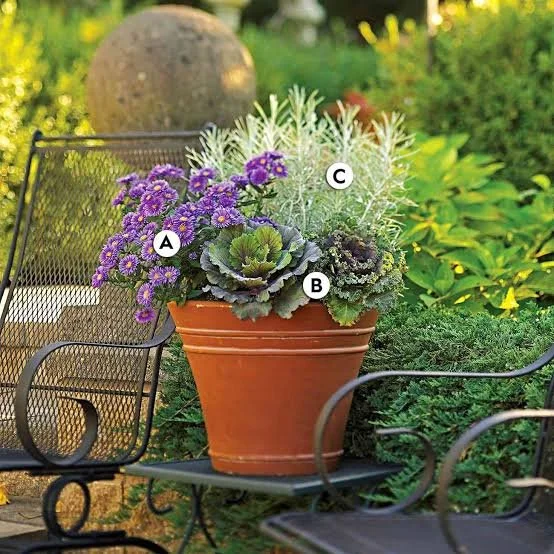
Choosing Mums That Are Worth the Money
Most garden center mums are sold in full bloom because that is what sells. The problem is that a mum in full flower is a mum that is nearly finished. Look instead for plants showing tight, colored buds with only a few flowers open. You will pay the same and get three extra weeks of bloom.
Squeeze the root ball before you buy. If it feels dry and light, that plant has already been stressed on a pallet in a parking lot, and it will never fully recover. Choose the heavier pot every time.
Hardy garden mums, sometimes labeled as perennial mums, can survive a Seacoast winter if you plant them in the ground rather than leaving them in a container. Container soil freezes solid and the roots have no protection. If you want mums to return next year, move them into a bed by early October so they can root in before the ground closes up.
Ornamental Grasses Are the Backbone
This is where most fall containers fall short. Mums alone read as flat and one note. Add a grass and the whole arrangement gains height, movement, and texture that lasts well past the flowers.
Purple fountain grass is the classic choice and it is stunning in a coastal setting, catching the light and moving with every breeze off the water. It is an annual here, so treat it as a one season investment. For something that carries into winter, try little bluestem or a compact miscanthus, which hold their form and color long after frost has taken everything else.
Place the grass off center rather than dead center. A container that is slightly asymmetrical looks designed. A container with something spiky planted exactly in the middle looks like a supermarket display.
Asters Bring the Color Mums Cannot
Asters are the underused workhorse of fall containers. Their small daisy flowers in purple, lavender, and pink give you a softness that mums simply do not have, and they bloom later in the season. A container with mums, a grass, and asters will move through several distinct looks as each plant peaks.
New England aster is native and beloved by late season pollinators, which matters more than people realize. The bees and migrating monarchs moving down the coast in September and October need those last nectar sources, and your front steps can be part of that.
Building the Container
Start with fresh potting mix, not the exhausted soil your summer annuals left behind. That old mix is compacted, depleted, and often full of circling roots.
Plant tighter than you would in spring. Fall containers are not growing much, so there is no need to leave room for expansion. Pack them in and the arrangement looks full on day one.
Add a few trailing elements at the edges. Creeping jenny, ivy, or even a spill of ornamental kale softens the rim and keeps the container from looking like a bucket of flowers.
Water deeply at planting, then check every three or four days. Coastal wind and afternoon sun will dry a pot faster than the cool air suggests.
Let Us Handle It
Fall containers are one of those projects that look simple and take real judgment to get right. Plant selection, proportion, placement, and timing all matter, and getting them wrong means starting over in three weeks.
Seacoast Gardener designs and installs seasonal containers throughout North Hampton and the surrounding Seacoast, along with pruning, shrub care, ornamental tree work, weeding, and mulching. We know the local microclimates, the soils, and exactly how long a planting will hold here.
If your pots are looking tired and you would rather enjoy the season than troubleshoot it, reach out. We would be glad to help.
📞 (603) 770-5072 | 🌐 www.seacoastgardener.com
