Planning a Winter Windowsill Herb Garden
Why Winter Is the Perfect Time to Grow Herbs Indoors
Winter on the Seacoast of New Hampshire and Southern Maine has a way of slowing everything down. Gardens rest under frozen soil, daylight shortens, and Zone 6b conditions push most plants into dormancy. Yet this quieter season is actually ideal for growing herbs indoors, especially on a sunny windowsill. A winter herb garden keeps you connected to plants while bringing fresh flavor and greenery into your home.
As a Master Gardener, I often remind homeowners in Portsmouth, Rye, and Exeter that winter gardening is about intention rather than abundance. Indoors, we trade expansive beds for careful placement and thoughtful care. When done well, a windowsill herb garden can stay productive all winter long and set you up for success when spring returns.
Choosing the Right Herbs for Winter Success
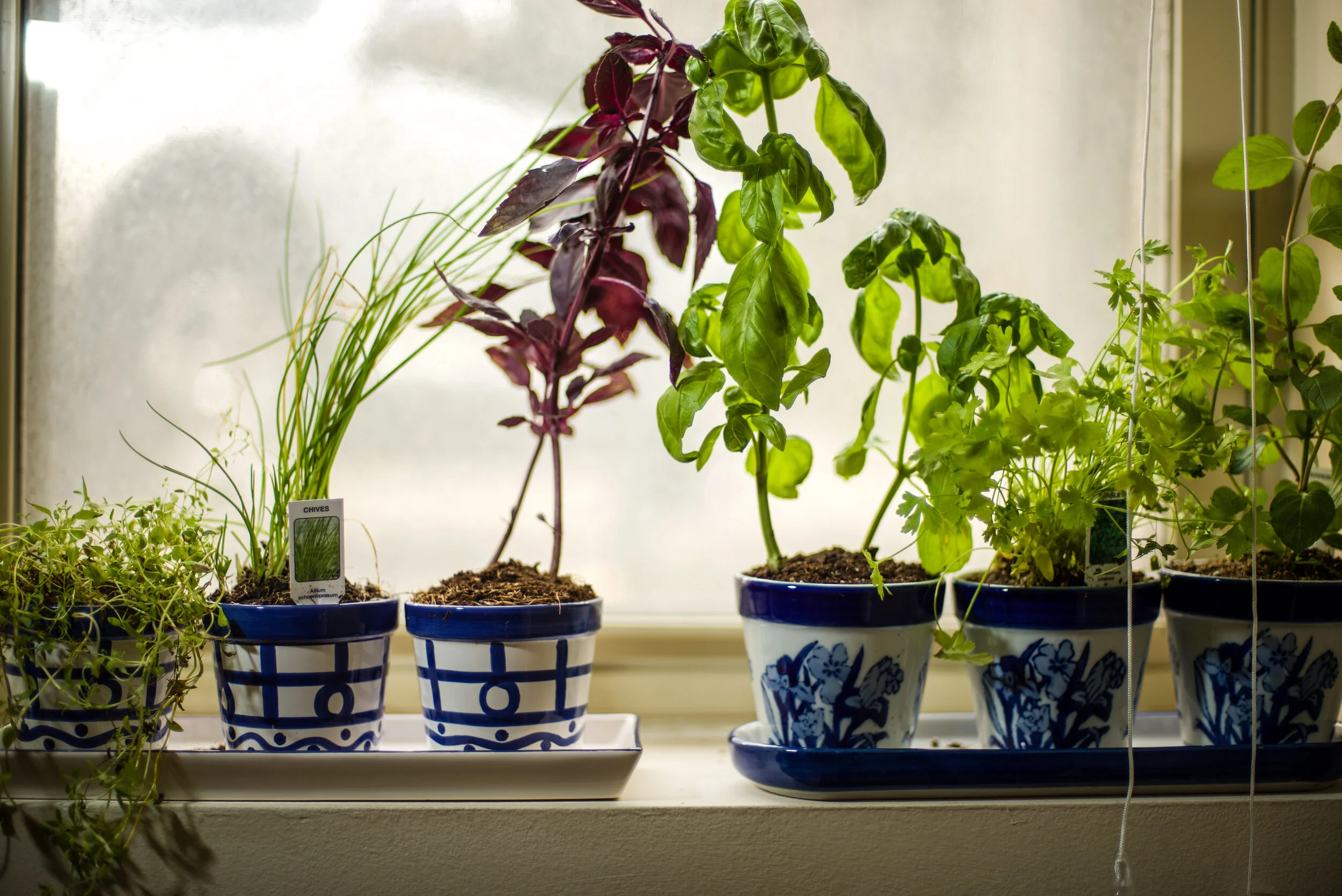
Not all herbs enjoy indoor life, especially during short winter days. Start with reliable performers like basil, thyme, oregano, chives, parsley, rosemary, and sage. These herbs adapt well to containers and tolerate the drier air common in heated homes along the Seacoast.
Select compact varieties whenever possible. Smaller plants are easier to manage on a windowsill and respond better to regular harvesting. If space allows, grouping herbs with similar watering needs helps simplify care and keeps roots healthier through winter.
Light Matters More Than You Think
Winter sunlight in North Hampton and surrounding coastal towns is lower and weaker than in summer. South facing windows are best, offering the brightest and longest exposure during short days. East facing windows can also work, especially for herbs like chives and parsley that tolerate gentler light.
If plants start stretching or leaning, that is a sign they need more light. Rotating pots weekly keeps growth even and prevents weak stems. Supplemental grow lights can be helpful, but many windowsill gardens succeed simply by choosing the brightest location in the home.
Soil and Containers Make the Difference
Good soil is the foundation of any healthy plant, whether outdoors or inside. Use a high quality potting mix rather than garden soil, which compacts and drains poorly. Proper drainage is essential, especially in winter when roots are more vulnerable to rot.
Choose containers with drainage holes and saucers to protect windowsills. Terracotta pots help regulate moisture, while glazed pots retain water longer. In either case, avoid overcrowding roots and give each plant space to breathe.
Watering With a Winter Mindset
Overwatering is the most common mistake we see with indoor herbs during winter. Growth slows in low light, so plants use less water. Always check soil moisture before watering and allow the top layer to dry slightly between soakings.
In coastal homes where heating systems dry the air, humidity becomes important. Grouping plants together helps create a more stable environment. Occasional misting can help, but avoid soaking leaves late in the day when evaporation slows.
Harvesting and Pruning for Long Term Health
Regular harvesting keeps herbs compact and productive. Pinch back stems just above a leaf node to encourage branching. This type of gentle pruning mirrors the same principles we use outdoors when shaping shrubs and ornamental plants.
Never remove more than one third of the plant at a time. Balanced pruning supports steady growth and prevents stress. These same techniques guide our professional pruning work across the Seacoast, where timing and restraint make all the difference.
Connecting Indoor Care to Outdoor Garden Planning
Winter herb gardening is not separate from outdoor care, it is part of the same seasonal rhythm. While tending herbs indoors, winter is also the right time to plan pruning schedules for shrubs and ornamental trees. Structural pruning during dormancy promotes healthier growth in spring.
This is also the season to think about mulching needs, weeding strategies, and soil health improvements for your landscape. A thoughtful winter plan saves time and protects plants when warmer weather returns.
What Many Homeowners Overlook in Winter
One common oversight is forgetting that indoor plants still need attention to airflow and cleanliness. Remove dead leaves promptly to discourage pests. Keep windowsills clean and inspect plants regularly.
Another missed opportunity is professional winter assessment. While outdoor work may pause, winter is ideal for evaluating tree structure, shrub spacing, and long term garden goals. Expert eyes can spot issues that are easier to correct before growth resumes.
How Expert Pruning Supports Year Round Garden Health
At Expert Pruning, we approach winter as a planning and preparation season, not a break from care. Our fine gardening services support homeowners across Portsmouth, Rye, Exeter, and surrounding communities with precise pruning, shrub care, and ornamental tree expertise. Seasonal timing is central to everything we do.
We believe that healthy gardens come from consistent, knowledgeable care across all seasons. Whether indoors on a windowsill or outdoors beneath winter skies, plants respond best when guided with experience and respect for their natural cycles.
A Thoughtful Winter Is a Better Spring
A winter windowsill herb garden brings warmth and life into your home during the coldest months. More importantly, it keeps your hands and mind connected to the habits that make gardens thrive. With the right light, soil, and pruning, even winter can be a season of growth.
Call Seacoast Gardener today at (603) 770-5072 to schedule a consultation and work with trusted professionals who know how to keep Seacoast gardens healthy, resilient, and beautiful year round.