Common Weeds and How to Fight Them on the New Hampshire Seacoast
Why Weed Control Matters in the NH Seacoast
If you live in the Seacoast area of New Hampshire and you're trying to keep your garden healthy and low-maintenance, identifying and controlling common weeds should be at the top of your list. Weeds are more than just an eyesore. They crowd out your favorite flowers, weaken your lawn, and silently steal nutrients from your soil. At Seacoast Gardener, we believe successful gardening begins with knowing your enemies. Here’s our 3-part breakdown of how to identify, understand, and control common weeds in the New Hampshire Seacoast region.
Your Garden’s Weeds Are Trying to Tell You Something
Weeds aren’t just a cosmetic problem—they’re an early warning sign that something’s off in your landscape. Whether it’s compacted soil, thinning turf, or poor drainage, many common weeds thrive in stressed or unbalanced environments. By paying attention to which weeds are growing where, you can learn a lot about what your garden needs. That’s why weed control isn’t just about pulling what’s visible—it’s about restoring the conditions that allow your plants to flourish and keeping your landscape resilient year after year.
Common Weeds of the NH Seacoast
Weed season on the Seacoast runs from April through October, with some invaders showing up early in spring and others lasting deep into fall. Whether you’re dealing with lawn weeds, garden intruders, or cracks in your walkways, it’s important to know who you’re up against.
Here are some of the most persistent and problematic weeds you’ll find in the NH Seacoast:
Common Weeds of the NH Seacoast
Weed season on the Seacoast runs from April through October, with some invaders showing up early in spring and others lasting deep into fall. Whether you’re dealing with lawn weeds, garden intruders, or cracks in your walkways, it’s important to know who you’re up against.
Here are some of the most persistent and problematic weeds you’ll find in the NH Seacoast:
1. Crabgrass (Annual)
Appearance: Light green, coarse grass with wide blades; low-growing with sprawling stems.
Emerges: Late spring to early summer.
Where It Grows: Lawns, sidewalk edges, driveways.
Notes: Thrives in thin, dry lawns with poor soil.
2. Bindweed (Perennial)
Appearance: Twining vine with arrow-shaped leaves and white or pink trumpet-shaped flowers.
Emerges: Mid-spring, aggressively spreads through summer.
Where It Grows: Garden beds, fences, shrubbery.
Notes: Spreads through deep roots and seeds. Difficult to remove.
3. Quackgrass (Perennial)
Appearance: Tall grass with flat, rough blades and thick underground rhizomes.
Emerges: Early spring.
Where It Grows: Vegetable beds, lawns, edges of hardscapes.
Notes: Roots snap easily, making full removal tricky.
4. Mugwort (Perennial)
Appearance: Deep green top leaves with silvery undersides, aromatic smell when crushed.
Emerges: Late spring.
Where It Grows: Roadsides, perennial beds, untended areas.
Notes: Spreads by underground runners and seeds. Very resilient.
5. Purslane (Annual)
Appearance: Succulent, reddish stems with small, fleshy leaves; yellow flowers.
Emerges: Early summer.
Where It Grows: Bare soil, walkways, garden rows.
Notes: Grows low to the ground and spreads rapidly.
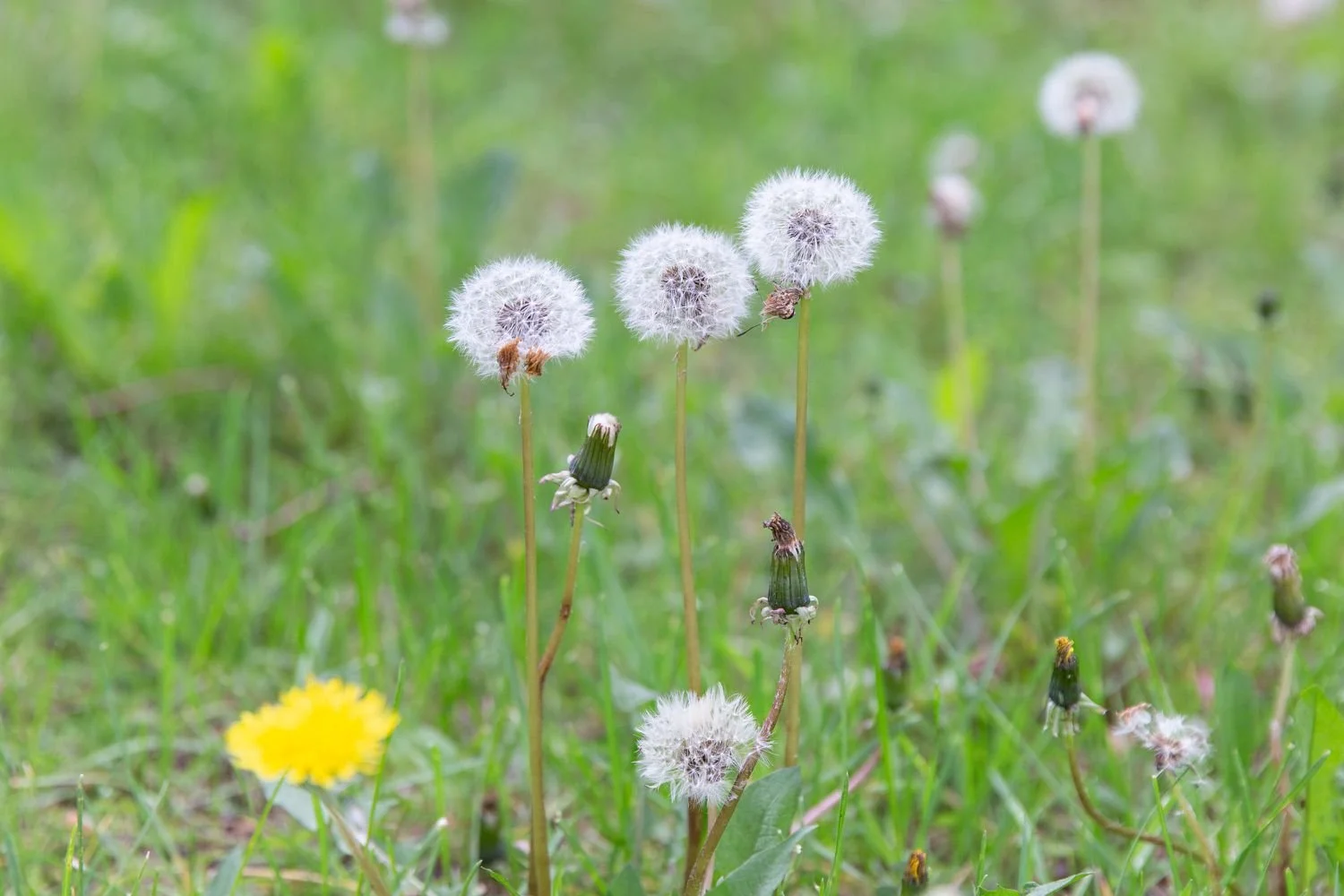
6. Dandelion (Perennial)
Appearance: Bright yellow flowers, deeply toothed leaves, white puffball seed heads.
Emerges: Early spring.
Where It Grows: Lawns, driveways, garden beds.
Notes: Taproot is long and breaks easily. A single plant can produce thousands of seeds.
7. Japanese Knotweed (Perennial, Invasive)
Appearance: Tall, bamboo-like stems with heart-shaped leaves and white flower clusters.
Emerges: Mid-spring.
Where It Grows: Stream banks, roadsides, garden borders.
Notes: Extremely aggressive. Damages foundations and spreads via rhizomes.
Identifying weeds early and knowing their life cycle—annuals vs. perennials—is key to effective control. Annuals can be stopped with early removal before they seed. Perennials require targeted root management.
How Weeds Spread and What They Destroy
You pull a weed and think you’ve won. A week later, it’s back—and bigger. That’s because weeds are survival experts with multiple strategies to invade and conquer.
How Weeds Spread
Windborne Seeds: Dandelions and thistles release fluffy seeds that travel far.
Root Fragments: Plants like quackgrass regenerate from even a small piece of root.
Rhizomes and Runners: Bindweed and mugwort spread underground, forming dense colonies.
Self-Seeding: Crabgrass and purslane drop hundreds of seeds if left to flower.
What Weeds Damage
Lawns: Weeds outcompete turfgrass, creating patchy, unattractive lawns.
Flower Beds: Aggressive weeds crowd out desirable plants and reduce bloom potential.
Hardscapes: They take root in cracks, weakening structures like patios and walkways.
Soil Health: Weeds deplete nutrients and disrupt the microbial balance needed for healthy plant growth.
Pest Havens: Some weeds shelter harmful insects and diseases that can spread to your garden.
Invasive weeds like Japanese knotweed can damage foundations, retain walls, and drive up removal costs, while seemingly harmless ones like purslane can take over bare soil in a matter of days.
Seacoast Gardener’s Proven Weed Management Strategy
At Seacoast Gardener, we don’t believe in “spray and pray” weed control. We take a strategic, sustainable approach that addresses current problems and prevents future outbreaks.
Our Integrated Weed Management Includes:
1. Hand-Weeding & Root Removal
Especially for garden beds and around perennials, we target each weed’s root system and remove it entirely.
2. Mulching
We apply natural mulch to block light and suppress weed growth—while improving soil health and retaining moisture.
3. Selective Herbicide Use
In tough areas like walkways or heavily infested beds, we use eco-friendly spot treatments—only where necessary.
4. Root-Zone & Soil Health Treatments
We amend and monitor soil to help your desired plants thrive and make it harder for weeds to re-establish.
Prevention Is Key
We help you keep weeds out long-term with:
Proper plant spacing to limit open soil
Seasonal inspections and maintenance plans
Healthy turf management to crowd out lawn weeds
Timely action during peak growth seasons
Why Professional Help Makes a Difference
We identify weed types and tailor treatment to their biology.
We reduce long-term costs by preventing regrowth.
Our services are eco-conscious, kid-safe, and pet-safe.
You get more time to enjoy your landscape—not battle it.
📞 Need help keeping your garden weed-free and thriving? Contact us today for a personalized quote or to schedule a visit with our expert team. At Seacoast Gardener, we serve homeowners across the New Hampshire Seacoast with professional, eco-friendly garden care solutions. Whether you're dealing with stubborn weeds or want a long-term maintenance plan, we're here to help. Visit website or call us at (603) 770-5072 to get started.
