How to Keep Hanging Baskets Lush All Summer
Secrets to Full, Flowering Baskets That Thrive in the Seacoast Heat
Hanging baskets have a way of making a porch, entryway, or garden gate feel instantly welcoming. But by midsummer, many homeowners in Exeter watch their once-full baskets turn sparse, leggy, and tired looking. The good news is that with a few consistent habits, hanging baskets can stay lush, colorful, and overflowing well into early fall.
Why Hanging Baskets Struggle in Summer
The challenge with hanging baskets is that they are essentially a small, exposed root system suspended in open air. Unlike plants in the ground, they have no access to deeper soil moisture, no buffer from temperature swings, and no reservoir to draw from when the heat intensifies. In Exeter and across the New Hampshire Seacoast, summer afternoons can be warm and breezy enough to dry out a basket in a matter of hours.
Understanding this helps shift the way you care for them. A hanging basket is not low maintenance by nature. It rewards attention and responds quickly, both to good care and to neglect. Once you find the right rhythm, though, the results are well worth it.
Water More Than You Think You Need To
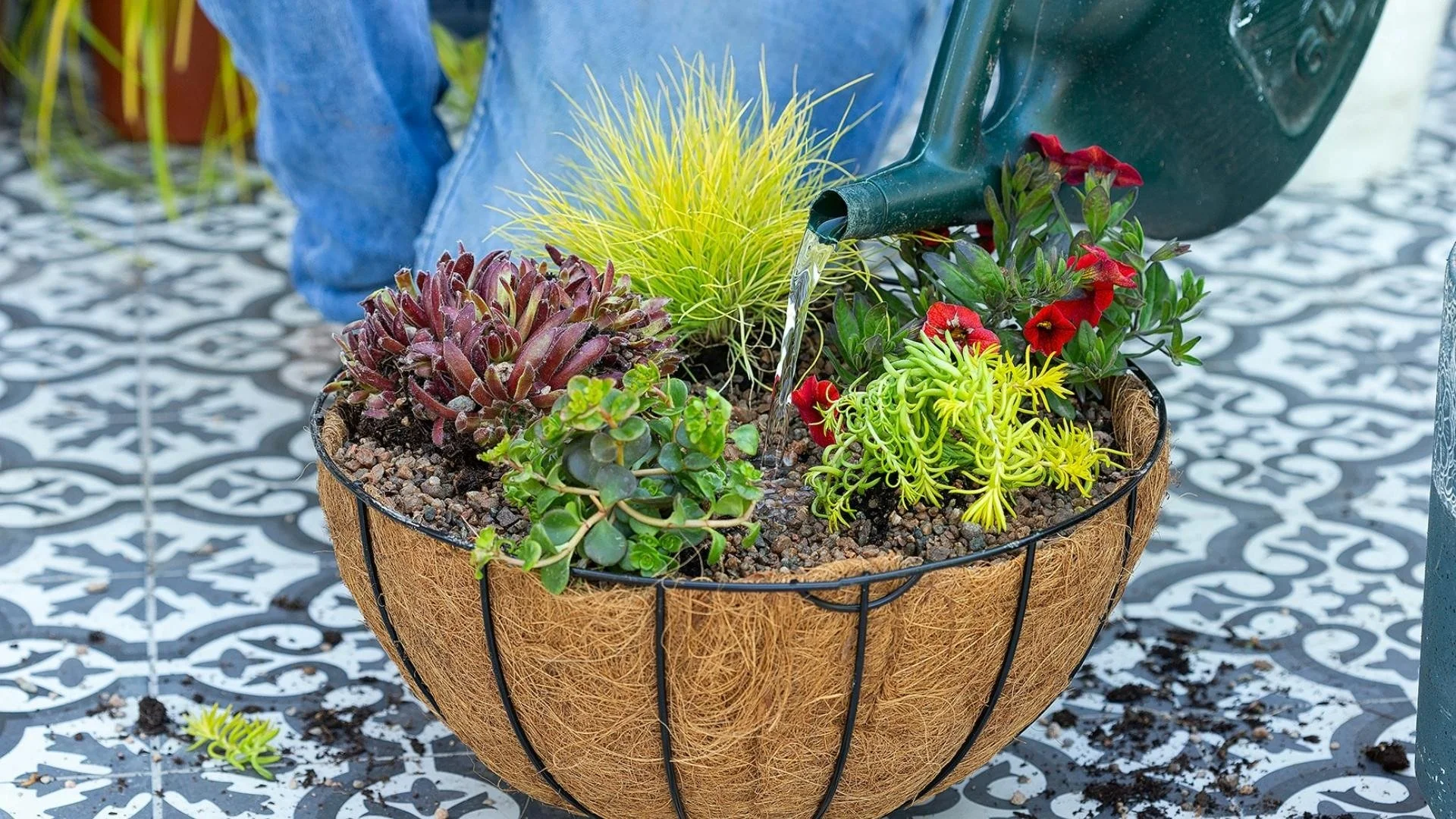
Watering is the single most important habit for keeping hanging baskets full and healthy through summer. Most baskets in full sun or partial sun need water at least once a day during warm weather, and during heat waves or windy stretches along the Seacoast, twice daily watering is not unusual.
The test is simple. Push a finger an inch into the soil. If it feels dry at that depth, it is time to water. When you do water, do it thoroughly until water drains freely from the bottom of the basket. A quick splash on the surface does very little for the roots below and gives a false sense that the plant has been tended to.
Early morning is the best time to water, allowing foliage to dry before the heat of midday. If a basket has dried out completely and seems to be repelling water rather than absorbing it, set it in a bucket or basin of water for twenty minutes to fully rehydrate the root ball before returning it to its hook.
Feed Regularly and Consistently
Because hanging baskets are watered so frequently, nutrients wash out of the soil much faster than in a garden bed. A basket that was fertilized at planting in late spring is likely running low on nutrition by July. Regular feeding is what keeps baskets producing new blooms rather than simply holding on.
A balanced water soluble fertilizer applied every seven to ten days works well for most flowering baskets. Look for a formula with a slightly higher middle number, the phosphorus, which supports flower production. For Exeter homeowners who prefer a lower maintenance approach, slow release granular fertilizer worked into the top layer of soil every four to six weeks is a reliable alternative.
Deadhead and Pinch to Keep Plants Producing
Many popular basket plants, including petunias, calibrachoa, bacopa, and trailing verbena, benefit from regular deadheading or light pinching throughout the summer. Removing spent blooms prevents the plant from putting energy into seed production and redirects it toward new flowers and foliage.
For petunias in particular, a light trim of about one third of the trailing stems every few weeks keeps the plant from becoming stringy and bare at the base. It feels counterintuitive to cut back something you want to look full, but this kind of gentle shaping is exactly what encourages dense, bushy regrowth. Within a week or two, the basket will look noticeably fuller than if it had been left to grow unchecked.
Choose the Right Location
Placement matters more than most people realize. A basket hung in the right spot will simply perform better with less effort. Most flowering basket plants want bright light, but in Exeter's midsummer heat, a location that receives morning sun and some afternoon shade often produces the best results. Full afternoon sun on a south or west facing exposure can stress even heat tolerant varieties.
Pay attention to wind exposure as well. Coastal breezes that feel refreshing to you can be drying and damaging to hanging baskets, accelerating moisture loss and occasionally breaking delicate stems. A sheltered spot under a porch overhang or near a wall offers meaningful protection without sacrificing the beauty of the display.
Refresh When Needed
Even with excellent care, some baskets hit a wall by late July or early August. If a basket looks truly spent, there is no shame in cutting it back hard, refreshing the top inch of soil with fresh compost, and giving it a deep feeding. Most annuals will rebound within two to three weeks, producing a fresh flush of growth that carries the basket through to fall.
If a plant has rotted at the crown or suffered irreversible root damage from drought stress, it may be time to replant with fresh material. A new basket installed in early August can look spectacular by September and extends the season considerably.
Let Seacoast Gardener Help Your Garden Shine
If your Exeter property could use a professional eye for seasonal container care, garden bed maintenance, pruning, mulching, or shrub and ornamental tree care, Seacoast Gardener is ready to help. We serve homeowners throughout Exeter, Hampton, North Hampton, Rye, Portsmouth, and the greater New Hampshire Seacoast and Southern Maine with fine gardening care that keeps landscapes looking their very best.
📞 (603) 770-5072 | 🌐 www.seacoastgardener.com